Carney Drives Canada Trade Shift From U.S., Markets Watch China

By Tredu.com • 1/20/2026
Tredu
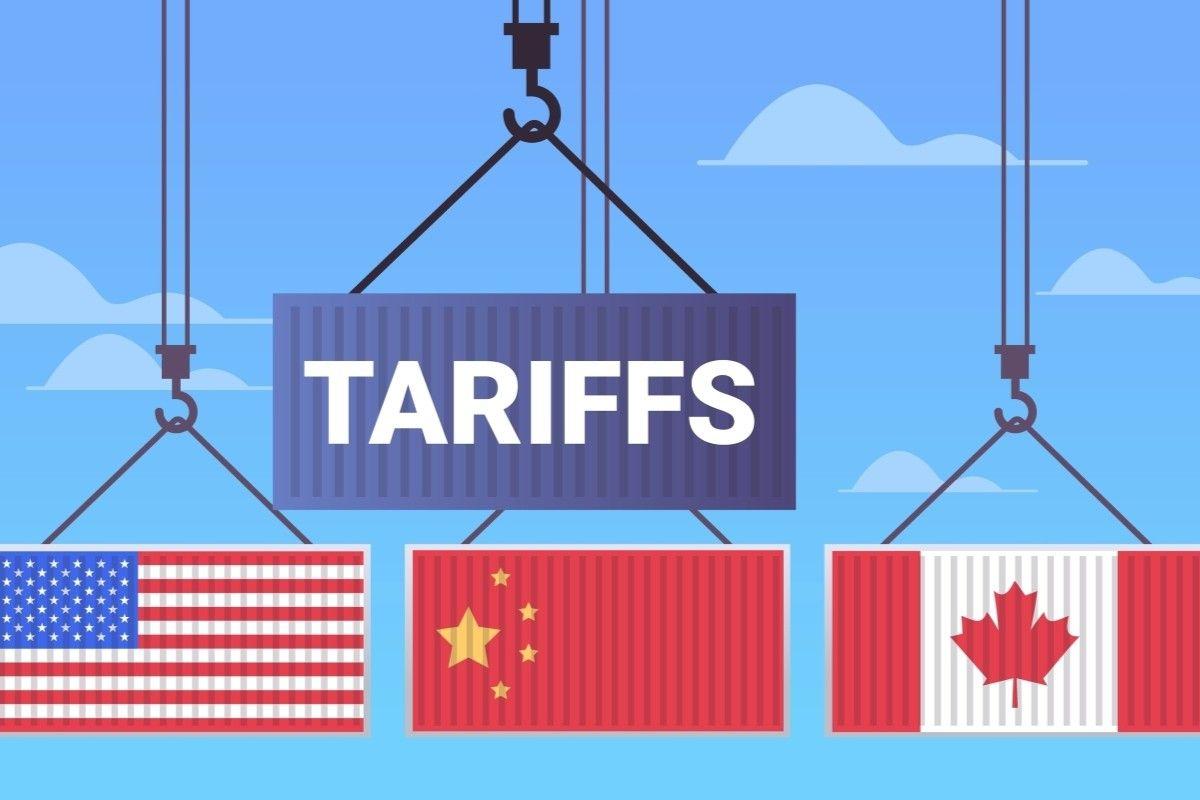
Canada’s trade diversification push becomes a market variable in 2026
Prime Minister Mark Carney is pitching Canada as a potential leader in a new global trading order that is less reliant on the U.S., pressing ahead with deeper commercial ties with China and a string of smaller trade arrangements. The strategy, highlighted this week in Ottawa, matters for investors because Canada still sends close to 70% of its exports south of the border, leaving the economy unusually exposed to shifts in U.S. tariffs, border policy, and political pressure.
Markets are now treating Carney’s plan as more than diplomacy. Any credible pivot in Canada’s export mix affects the Canadian dollar, rate expectations, and the earnings outlook for exporters, banks, and commodity producers, especially when the U.S. remains the anchor buyer for Canadian crude and manufactured goods.
Export math shows why reducing U.S. dependence is hard and expensive
Canada’s reliance on the U.S. remains far higher than Europe’s. The European Union ships just over 20% of goods exports to the U.S., while Canada remains near a two-thirds share, a gap that shapes how quickly either bloc can re-route trade without losing growth.
Prince Owusu, a senior economist with Export Development Canada, said the scale of the shift required is massive. He estimated that for Canada to reduce merchandise exports to the U.S. by 10%, it would need to double exports to China, Germany, France, Mexico, Italy and India, or find similarly large markets. That sets the challenge in plain numbers: cutting U.S. exposure requires many years of market development, logistics investment, and new buyer relationships.
Carney has pledged to double non-U.S. exports over the next decade. For investors, that timeline implies a long transition, with policy headlines influencing markets before the data does.
China ties add growth potential, but also a new risk premium
The most direct route to faster diversification is China, now Canada’s No. 2 trading partner. Carney’s government has been working more closely with Beijing as part of a push to widen access for Canadian goods and to keep doors open for investment.
That move creates a two-sided market reaction. On one side, greater China-Canada trade ties can support growth by expanding demand for Canadian products and reducing the probability of sudden U.S.-linked export disruptions. On the other, tighter China exposure imports new risks, including geopolitical friction, regulatory uncertainty, and the possibility that Chinese exporters gain faster access to Canadian consumers than Canadian firms gain in China.
William Pellerin, a partner and co-head for international trade at law firm McMillan, warned that moving too quickly and integrating too quickly with China creates issues around long-term stability. He also said Chinese manufacturers have the ability to flood the Canadian market overnight across many categories, a scenario that can pressure domestic pricing power and margins.
Oil is the constraint investors watch because the U.S. still buys most of it
Even if Canada’s export mix shifts at the margin, energy remains the core dependency. Roughly 90% of Canadian crude exports still go to the U.S., making the bilateral relationship central to cash flows, pipeline economics, and capex planning in the energy patch.
That matters for equities because energy remains a heavy driver of Canada’s index-level earnings. If Ottawa pushes harder for Asian energy routes, investors will watch whether infrastructure catches up, including transport capacity, long-term offtake contracts, and permitting clarity. Without those pieces, trade diversification stays more rhetoric than revenue.
The Canadian dollar trades the uncertainty before the exports move
The Canadian dollar often behaves like a mix of oil, U.S. rates, and global risk sentiment, but trade policy adds a sharp tail risk channel. If investors believe Canada’s U.S. exposure is being reduced in a durable way, it can tighten the downside distribution for CAD during U.S. tariff episodes. If the pivot increases uncertainty, including China-linked policy swings, the currency can trade with a wider risk band instead.
For bond markets, diversification is a growth story first. A cleaner path to non-U.S. export expansion can lift medium-term growth expectations, nudging yields higher through term premium. If trade tension rises and investment slows, bonds can rally while the currency weakens, a mix that tends to show up quickly in cross-asset positioning.
Europe’s parallel push shows Canada is not alone, but the bar is higher
Carney’s approach aligns with a wider shift among U.S. partners. Europe has been accelerating trade diversification through agreements and restarted negotiations, aiming to reduce tariff exposure and political leverage risk.
The difference is starting point. Europe has more balanced export geography, while Canada’s trade footprint remains heavily concentrated. That makes Canada’s plan more sensitive to execution risk and more dependent on policy follow-through, including domestic measures to remove internal bottlenecks that raise costs for exporters.
What markets will watch: actual deal flow and the sectors most exposed
The next market test is not another speech, it is measurable changes in contracts, export volumes, and investment commitments. Investors will track whether Canada signs additional trade arrangements that expand market access, and whether exporters report faster order growth outside the U.S.
Equity exposure concentrates in three areas:
- Export-heavy manufacturers, where margin sensitivity to tariffs is high.
- Financials, because banks price economic confidence and cross-border investment flows.
- Commodities and energy, where the U.S. buyer relationship remains central.
If Canada’s non-U.S. exports rise meaningfully, even from a low base, it can support a re-rating in sectors tied to global demand rather than U.S.-only demand.
Base case, upside trigger, downside trigger for 2026 pricing
Base case is gradual progress, with trade diversification advancing through incremental agreements and business outreach, while the U.S. remains Canada’s dominant customer. Under this path, CAD and Canadian equities trade with periodic volatility bursts tied to U.S. tariff headlines, but without a structural break.
Upside requires a clear trigger: faster growth in shipments to large markets outside the U.S., plus investment that reduces logistics friction. If those two conditions show up in export data and corporate guidance, markets can price a more resilient Canada growth profile and lower bilateral concentration risk.
Downside is driven by two concrete shocks: a surge in Chinese imports that pressures domestic industries, or renewed U.S. tariffs that hit Canada before replacement demand is secured elsewhere. In either case, investors would likely raise hedges, push risk premia wider, and treat the diversification effort as increasing uncertainty rather than reducing it.
Bottom line:
Carney’s bid to reshape Canada’s trade relationships is now a market story because the country remains highly exposed to U.S. policy swings. Investors will reward visible progress on non-U.S. exports, but they will also price a China-linked risk premium if the pivot moves faster than protections and infrastructure.