Equinor Pushes Hammerfest LNG Upgrade to 2029 as Costs Rise

By Tredu.com • 12/23/2025
Tredu
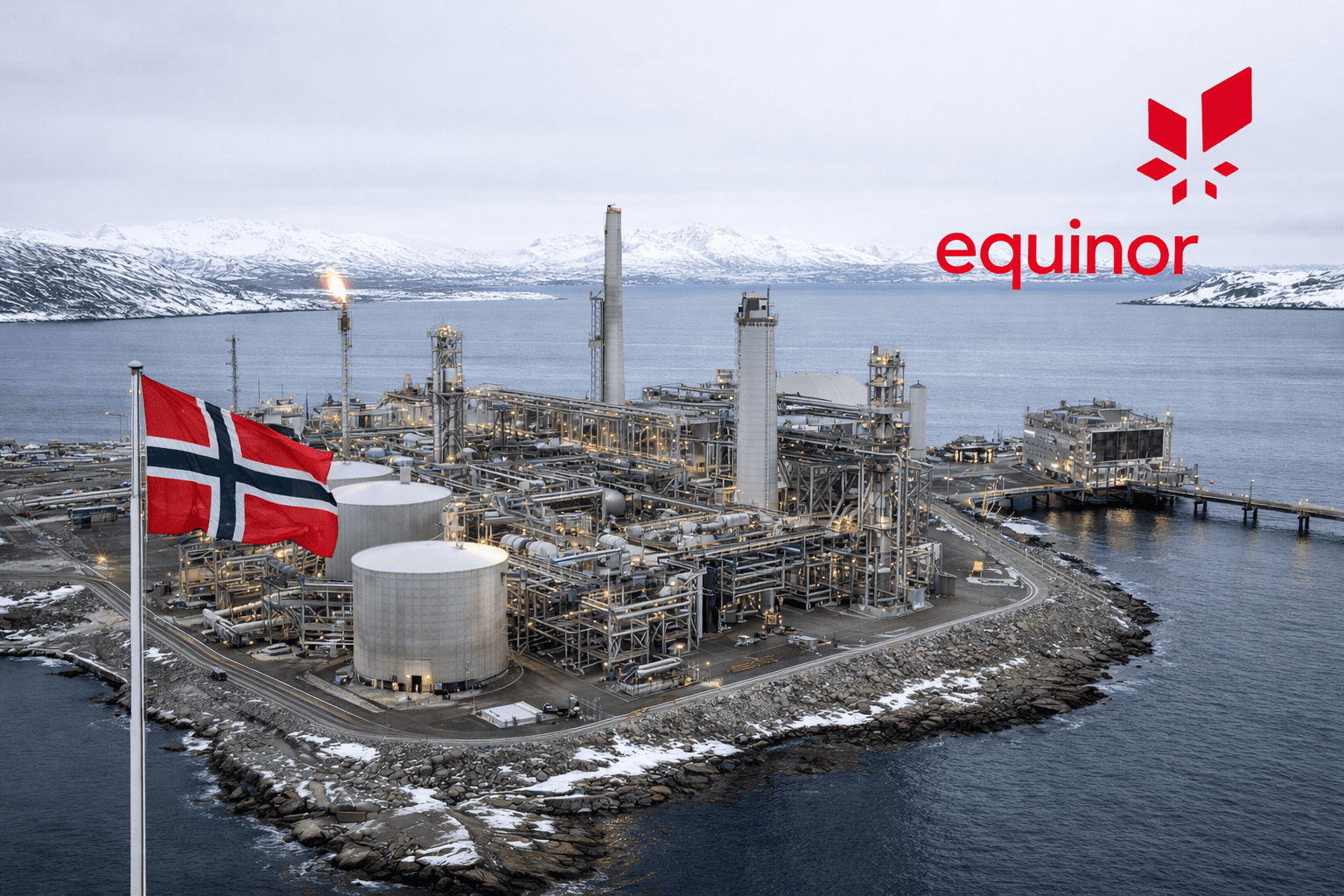
Equinor delays a flagship Arctic LNG upgrade as costs climb
Equinor delays and pushes the Hammerfest LNG upgrade to 2029 as costs rise, reshaping timelines for one of Norway’s most important gas and emissions projects at a moment when Europe continues to prize reliable supply. The company’s Snøhvit Future program, which modernizes the Melkøya island plant and adds onshore compression to sustain output, is now expected to start up a year later than planned, with a larger bill than investors and authorities were working from.
The change matters beyond a single facility. Hammerfest LNG is a critical outlet for Barents Sea gas, and the upgrade is designed to extend plateau production as reservoir pressure declines. A one-year slip can ripple through equipment scheduling, contractor availability, and offshore work windows, while higher capital spending tests the economics of electrification at a time when large industrial projects across Europe are absorbing cost inflation.
What changed: later start, bigger estimate
Equinor now expects onshore compression, a key part of the upgrade package, to start in 2029, one year later than the original plan. At the same time, the company lifted the project cost estimate to more than NOK 20 billion in 2025 kroner, up by roughly NOK 4 billion from its 2024 view of the project.
The new figure is a sharp step up from the NOK 13.2 billion estimate that accompanied the formal development plan submitted in 2022, and it remains substantially higher even after adjusting the earlier figure for inflation to NOK 14.7 billion. The widening gap highlights how execution risk can compound when a complex retrofit must be delivered inside a live, operating plant with tight safety constraints.
Why this plant matters to Norway’s gas system
Hammerfest LNG is the onshore processing and liquefaction endpoint for the Snøhvit gas and condensate field in the Barents Sea. Gas is transported to Melkøya via a 143-kilometre pipeline, processed into LNG and shipped abroad, with carbon dioxide separated and reinjected offshore as part of the field’s design.
In normal operation, the plant delivers about 6.5 billion cubic metres of LNG per year, and production from Melkøya corresponds to roughly 5% of Norway’s total exports. The facility’s scale makes it strategically important, not only for Norway’s revenue base but also for buyers looking for stable flows into European markets.
What Snøhvit Future is trying to do
The Snøhvit Future project has two core components. The first is onshore compression, intended to maintain plateau production at Hammerfest LNG as reservoir pressure falls, keeping gas flowing without requiring a redesign of the offshore subsea layout. The second is electrification of Hammerfest LNG, which is designed to reduce direct emissions from the facility’s operations.
Equinor has positioned the program as a way to sustain long-term gas exports while cutting greenhouse gas emissions from upstream operations. For the Norwegian state, the project also has an industrial policy dimension because it supports jobs and procurement in Northern Norway, where large-scale industrial activity is more concentrated around a smaller set of anchor facilities.
Drivers of the delay: execution inside a live plant
Equinor described the project as about halfway completed, but flagged that the work has been more difficult to plan and execute than expected. Retrofitting an operating LNG plant brings a different risk profile than building greenfield infrastructure, because contractors must work around ongoing operations, safety barriers, and fixed shutdown windows where certain tasks can be performed.
Several specific factors slowed progress. The winter of 2024/2025 was worse than normal, limiting work in certain parts of the plant. Engineering costs rose because integration into existing facilities proved more complex than expected. A major turnaround in the summer of 2025 was extended, pushing back the resumption of project work on Melkøya. Equinor also pointed to high inflation, which increased the cost of procuring equipment.
Emissions goals and the cost of decarbonizing LNG
Electrification is central to the emissions case. Equinor has said electrifying Hammerfest LNG would cut annual CO2 emissions by about 850,000 tonnes, equivalent to roughly 2% of Norway’s annual emissions. That scale is meaningful for a country where industrial decarbonization is increasingly concentrated in a handful of large projects with visible national impact.
The delay does not cancel those reductions, but it shifts when they arrive. For policy makers, it complicates near-term emissions planning and raises pressure on other measures to offset the timeline slip. For Equinor and its partners, the cost increase sharpens focus on how electrification is financed and how the value is shared across the project’s ownership group.
Local industry impact and who benefits from spend
Equinor expects a substantial share of total value creation during the development phase to land domestically, estimating about 70% of value creation will go to Norwegian companies, with more than one-third of that going to firms in Northern Norway. Those flows are politically salient because the project sits in a region where jobs and contractor activity can be closely tied to a few major industrial sites.
The Snøhvit license owners include Equinor Energy, Petoro, TotalEnergies EP Norge, Vår Energi, and Harbour Energy Norge, meaning the capital burden and benefits are split across multiple stakeholders. That structure can be stabilizing, but it can also require tighter coordination when scope changes or procurement needs are revised.
What to watch next
Investors and policymakers will focus on three near-term signals. First is whether the revised 2029 schedule holds, or whether additional slippage emerges as the most complex integration work is executed. Second is whether cost inflation continues to push procurement higher, especially for specialized equipment and services that face tight supply. Third is how the delay influences the plant’s long-term production profile, including whether additional upstream or infrastructure measures are needed to sustain throughput while compression is being delivered.
Equinor pushes and delays the Hammerfest LNG upgrade to 2029 as costs rise, and the market’s next read will hinge on whether the updated plan restores predictability. If execution stabilizes, the project can still deliver both supply resilience and emissions reductions; if not, it risks becoming another case where retrofit complexity stretches timelines and budgets beyond what early plans implied.