Wall Street CEOs Warn of 10%–20% Pullback From Rich Valuations

By Tredu.com • 11/4/2025
Tredu
What happened
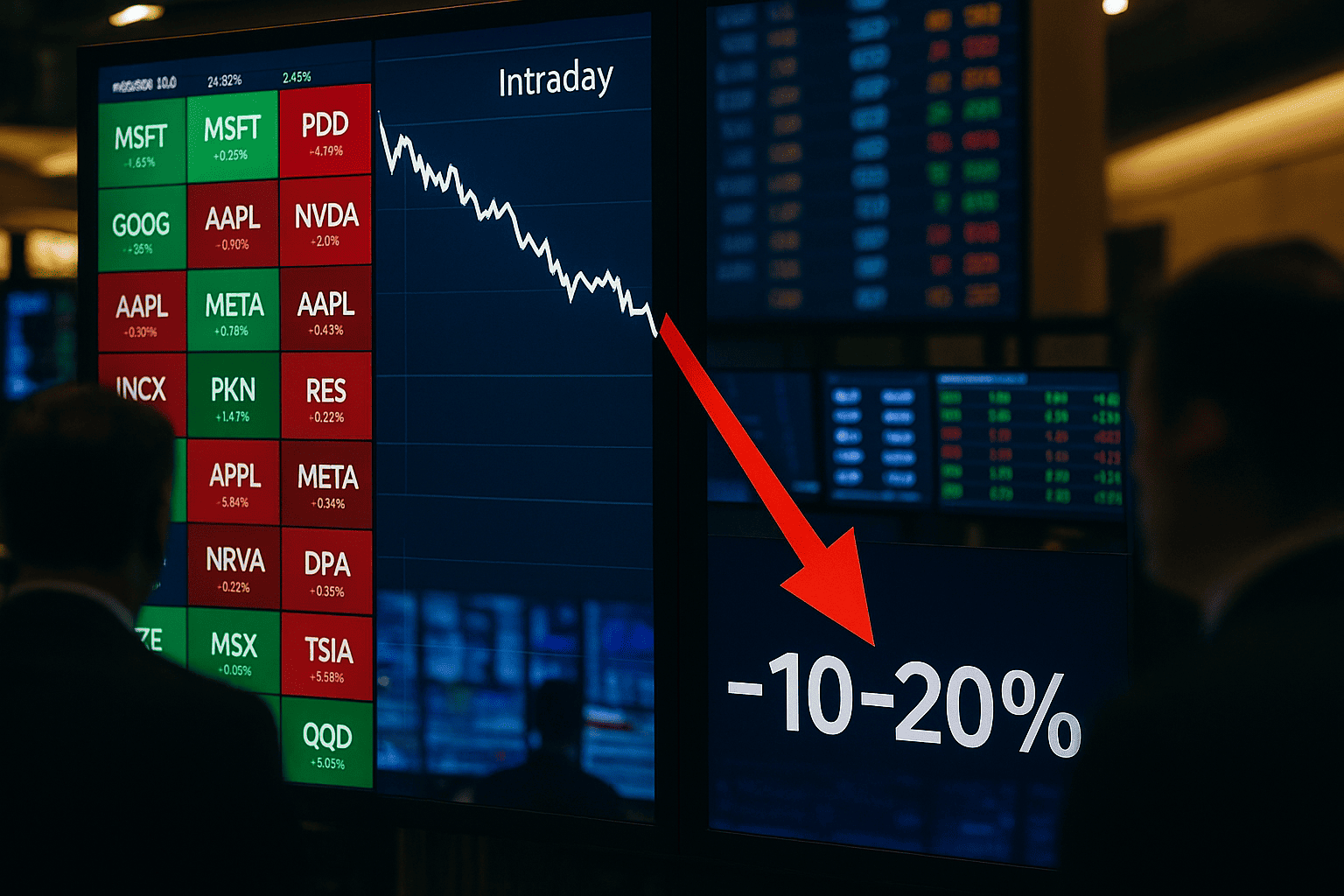
Wall Street CEOs warned that an equity drawdown of more than 10 percent is increasingly likely within the next year or two, citing stretched valuations and a fragile macro backdrop. Coverage from Yahoo Finance, drawing on Bloomberg reporting, said several chief executives framed a 10%–20% decline as a healthy reset after a powerful run in mega cap technology shares. Separate remarks from Goldman Sachs and Morgan Stanley leaders at a Hong Kong summit echoed the caution, with one CEO calling a mid-teens correction plausible even without a new macro shock. Futures and risk gauges reflected the tone as traders pared near term rate cut bets.
Why they are sounding cautious
Executives pointed to a cluster of risks that can flip sentiment quickly: rich multiples in segments tied to artificial intelligence, a slower path to Federal Reserve easing, a strong dollar, and persistent geopolitical tensions. The message is not a call for recession, rather a reminder that pricing has outrun earnings in parts of the market and that position risk is elevated. When leadership is narrow and liquidity concentrates in a handful of stocks, small narrative changes can produce outsized swings.
What they said, in context
According to the Yahoo Finance summary, CEOs suggested investors should prepare for a double-digit pullback over 12 to 24 months, a time frame that allows for continued earnings growth but also accounts for air pockets in flows. Reuters reported similar comments from bank chiefs in Hong Kong, who argued that a 10–15 percent step down could be constructive if it releases pressure without damaging credit or employment. The common thread is valuation discipline rather than a call to de-risk across the board.
Macro cross-currents that matter now
Markets are recalibrating after mixed signals from Federal Reserve officials. Traders have trimmed the probability of a December rate cut and reduced the expected pace of easing for early 2026. A firmer dollar and tighter financial conditions tend to pressure non-U.S. risk assets and commodities, while long duration bonds can catch a bid as growth concerns simmer. In this setting, leadership depends on earnings delivery and cash flow, not only on multiple expansion.
What a 10%–20% correction would imply
A move of that size would take the major U.S. indices back toward late-summer levels, close some valuation gaps, and likely broaden participation if quality cyclicals and smaller caps reprice less harshly than the highest multiple names. For portfolios, the mechanical effects include higher volatility, wider credit spreads at the margin, and a reset in equity risk premia. For corporates, buyback timing, issuance windows, and M&A terms would adjust to new valuations.
Sector lenses
- Tech and AI beneficiaries: The bar for upside is high. Delivery on monetization, not only model announcements, will separate winners from momentum trades.
- Financials: A measured correction that lifts volatility and widens spreads can support trading results, while higher for longer front-end yields keep deposit pricing in focus.
- Energy and materials: Sensitive to global growth and the dollar. Inventory signals and OPEC+ cadence set near term tone.
- Defensives: Staples and health care often hold relative value when multiples compress, but idiosyncratic risks around litigation and regulation still bite.
How investors are positioning
Flow trackers show heavier use of options for downside protection and more selective exposure to high beta names. Multi-asset allocators are tilting toward quality balance sheets, free cash flow visibility, and lower refinancing needs. The caution is tactical, not a wholesale retreat. Investors remember that previous corrections, even severe ones, often restored better forward returns once valuations reset.
Signals to monitor
Three signposts will help validate or fade the warning.
- Earnings breadth: If beats broaden beyond the top cohort, leadership can widen and reduce the need for multiple compression.
- Policy path: Clear evidence of disinflation would support rate cuts next year; failure to progress would keep the dollar firm and financial conditions tight.
- Credit tone: High yield issuance quality, default trends, and loan officer surveys will show whether tighter conditions translate into real economy weakness.
Practical portfolio takeaways
Raise the quality bar within equities, keep some dry powder for forced selling, and use hedges opportunistically when implied volatility is cheap. Avoid blanket de-risking; focus on names with durable margins, pricing power, and modest capital intensity. For tactical traders, respect breakout levels on the dollar and watch term structure in equity volatility for signs of stress. If a pullback materializes, staged entries near prior congestion zones can improve long term outcomes.
Phrase coverage, inside the narrative
The CEO guidance can be summarized as follows: Wall Street CEOs Warn of 10%–20% Pullback From Rich Valuations, and in plain terms, Wall Street CEOs Warn 10%–20% Pullback Risk as investors weigh stretched pricing against slower policy relief. This encapsulates the core message without implying a recession call.
Bottom line
Executives across Wall Street say valuations leave little room for error and that a 10%–20% correction would not be surprising. The caution stems from stretched pricing, slower policy relief, and fragile sentiment. For investors, that argues for quality, liquidity, and discipline while waiting for earnings breadth to catch up.