How AI-Powered Forex Robots Enhance Strategic Trade Execution

By Tredu.com • 3/2/2026
Tredu
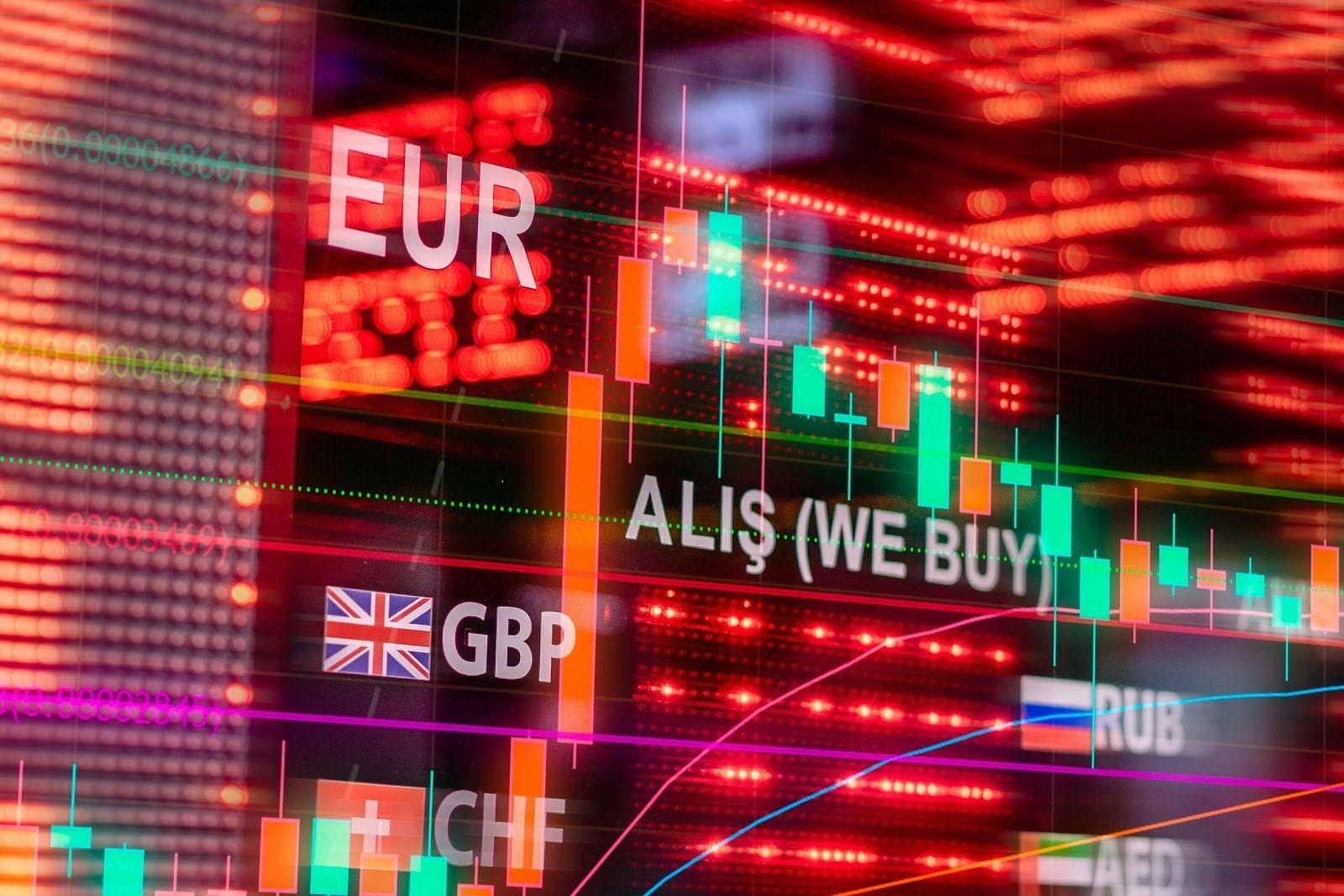
Artificial intelligence has significantly changed the nature of forex trading. There is a tendency among traders to resort to automated systems which examine the market data, trade and manage risk in a more efficient manner than manual.
The leading frontier of this development is the AI-powered forex trading robot, an advanced algorithmic trading system that processes large volumes of market data and automatically executes trades based on predefined algorithms. These tools are available on platforms such as Forexio, where traders can leverage machine learning, predictive analytics, and adaptive models that evolve as market conditions change.
The early adoption of AI in trade execution is not merely an innovation in an asset class that turns over more than $7.5 trillion daily, according to the Bank for International Settlements, but is already an competitve advantage for those who utilize it. Statistics indicate that automated systems of execution can help users of these systems to minimize emotional bias in trading by as much as 85%, respond faster to market events by several milliseconds and increase consistency in performance results. The volume of trading captured by AI-driven solutions is increasing across both retail and institutional players.
The Role of Machine Learning in Forex Decision Making
AI-powered forex robots use machine learning models to detect patterns in historical price changes, volatility shifts, and macroeconomic news releases. Classical technical analysis, such as moving averages, RSI, and Fibonacci retracements, is enhanced when supplemented with adaptive algorithms that weight inputs in real time based on feedback.
For example, an artificial intelligence model trained on multi-year currency-pair data may identify that the EUR/USD pairing is more likely to turn after certain macroeconomic releases. A manual trader, by comparison, would fail to notice the correlation that is hidden in thousands of data points. In the latest industry news, AI-enhanced models have been reported to increase prediction accuracy by more than 30 per cent compared with conventional statistical methods.
This predictive power gets directly to strategic trade implementation. Rather than fixed rules, AI models are designed to adapt their positions in response to changing market conditions, particularly during events such as central bank announcements, when volatility spikes. An analysis by McKinsey found that algorithmic decision systems could reduce trade execution errors by up to 25%, mainly because they can respond more quickly and reliably to market pressures than human traders.
Speed and Scalability in Market Execution
The Forex markets operate 24-hour trading sessions worldwide. The opportunities may come and vanish in seconds. Human merchants with limited cognitive and physical abilities cannot compete with automated systems. Having order processing speeds that are in microseconds, AI-powered robots scan through several currency pairs simultaneously.
This speed advantage has not just an effect on the timing of entry and exit, but also slippage, where the trade fills at a new price than anticipated. Slippage can reduce profits, particularly in highly volatile environments. According to industry standards, automated execution systems are 40% more effective than manual execution at controlling slippage, as they can divide large orders into smaller, more productive fills across liquidity pools.
In addition, AI systems can scale across various asset classes. A trader who operates a machine learning forex robot can track EUR/USD, GBP/JPY, USD/CAD, and emerging market FX pairs without a negative impact on the performance. This diversification of strategy is enabled by scalability, mitigating idiosyncratic risk by allowing participation in multiple markets simultaneously.
Dynamic Risk Management Through AI Insights
Strategic trade execution centers on risk management. Traditional stop-loss and take-profit orders are static; they do not adapt to changing market conditions. By contrast, AI-driven robots continuously assess risk-exposure criteria based on real-time data-implied volatility, intermarket correlations, and recent order flow.
Algorithms can dynamically adjust stop levels or reduce position size when the model's perceived risk environment increases. Adaptive risk management in backtests has reduced drawdowns by up to 20 percent, allowing higher returns without increasing risk tolerance.
Also, AI systems typically provide portfolio-level risk scores that give traders comprehensive information. Traders view the position as a combined rather than a separate (currency-pair) position, which is vital when macro products interact in the market simultaneously. This strategy aligns with institutional risk models and promotes disciplined implementation.
Enhancing Strategy Through Continuous Learning
Continuous learning is one of the most distinctive benefits of AI-enhanced trade systems. Models are developed to become more precise as data evolves, prompting adjustments to strategies. This ability to learn contrasts with rule-based Expert Advisors that operate on fixed code.
Regime changes driven by monetary policy dynamics, market pressures, or geopolitical factors can be detected by machine learning models, which can then be reweighted accordingly. Certain AI applications have shown sustained performance gains over months as they learn from additional data, mirroring trends observed in other sophisticated neural networks across financial markets.
This ongoing development makes AI tools resistant to structural shifts in the forex environment, with past relationships not necessarily predictive of future outcomes. Traders who leverage such adaptive models can stay aligned with market signals rather than relying on outdated heuristics.
The Human and Machine Partnership
Although AI-based forex robots offer many benefits, they do not replace human insight. Effective implementation usually involves both algorithmic accuracy and human discretion in the choice of strategy, market environment, and greater economic interpretation. Decisions made through the integration of the two enhance decision-making structures.
Ultimately, AI-enabled applications enhance strategic implementation by expanding analytical capabilities, accelerating speed, and improving risk management. Such improvements provide traders with an advantage in a market where milliseconds count and data streams are epic. The future of forex strategy implementation will be formed by machine-assisted trading as the practice of adoption keeps growing and the participants of the market will be able to go through this complex world more confidently.