Air India Seeks Xinjiang Overflight to Cut Costs as Losses Mount

By Tredu.com • 11/19/2025
Tredu
What happened
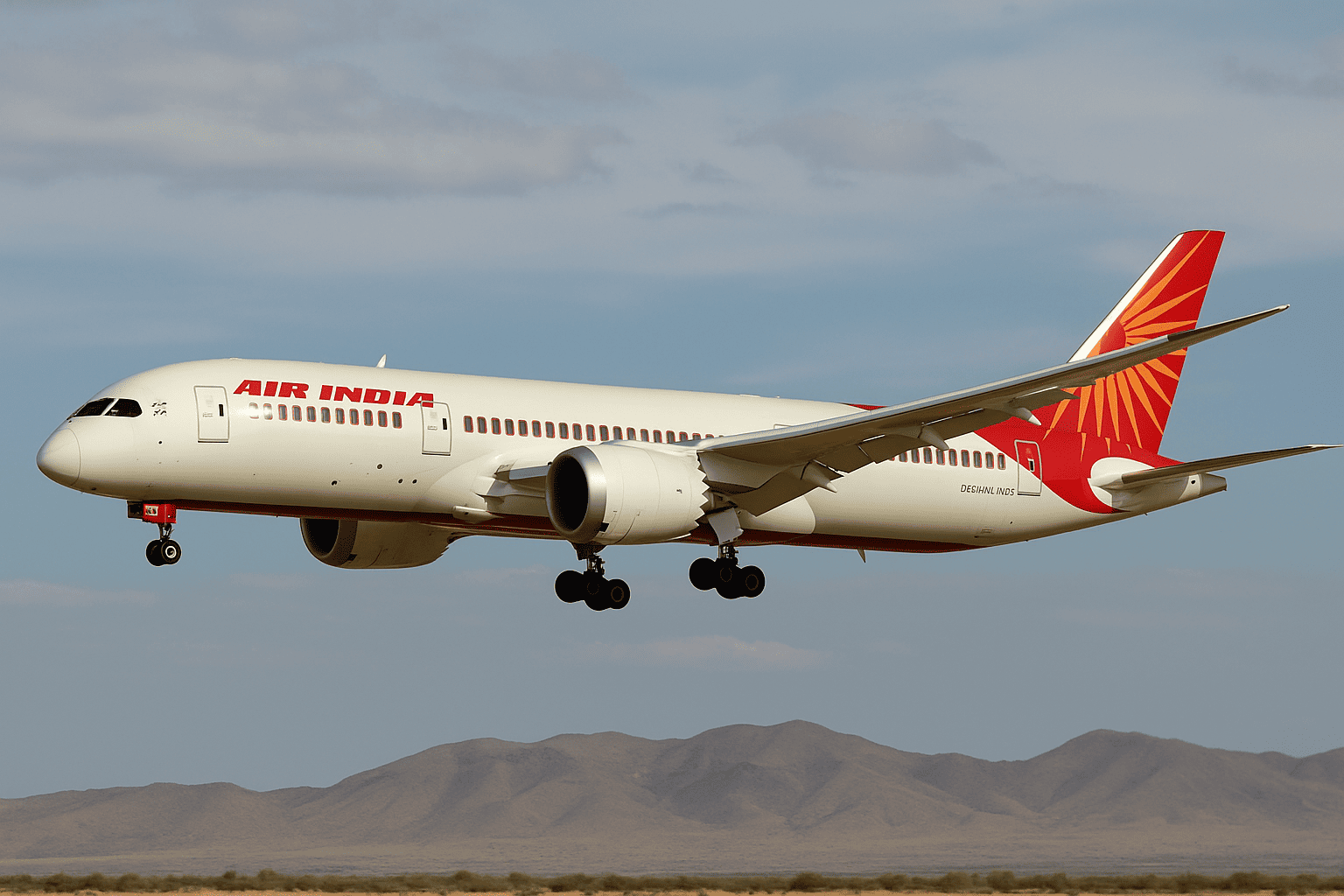
Air India is lobbying India’s government to request access from China for a sensitive overflight corridor across Xinjiang, including zones near Hotan, Kashgar, and Urumqi. The push follows Pakistan’s continued ban on Indian carriers, which has forced long detours, higher fuel burn, and extended journey times on Europe and North America routes. Company materials cited by Reuters say the detours have lifted fuel costs by up to 29 percent and added as much as three hours to some services, aggravating already tight finances. China’s foreign ministry said it was unaware of the request, and relevant aviation authorities did not comment.
Why Xinjiang matters for flight economics
For India–Europe and India–U.S. traffic, the shortest great-circle paths often cross Pakistan or western China. With the Pakistan corridor shut since April, Indian airlines have routed through Central Asia or the Arabian Peninsula, which increases block times, crew hours, and fuel uplift. Air India argues that an approved Xinjiang track would restore competitive stage lengths, reduce reserve requirements, and improve on-time reliability.
The financial backdrop
Reuters reporting points to a sharp hit to the airline’s profitability from the airspace closure, with internal estimates of hundreds of millions of dollars in annual impact from extra fuel and time. The carrier has also sought temporary relief on taxes and a subsidy to bridge cash needs while network adjustments are in force. Management portrays Xinjiang access as a structural fix that lowers unit cost rather than a one-off patch.
Network implications
Air India previously curtailed or suspended some long-haul flying, including the Delhi–Washington route, citing fleet retrofits and the Pakistan overflight ban as compounding factors. A China corridor could support reinstatement or higher frequency on North America services such as San Francisco and potential East Coast adds, since restored stage lengths improve aircraft and crew utilization, cargo payloads, and schedule attractiveness.
Diplomatic and operational hurdles
Xinjiang airspace includes zones managed with heightened security oversight. Any approval would require clearances from China’s military and civil aviation authorities, route and level agreements, contingency plans, and validations for communication and surveillance coverage. India–China ties have improved modestly this year with steps to resume direct flights, yet border sensitivities and export-control politics add complexity. Even with a political nod, airlines must complete safety assessments before dispatch.
Competitive landscape for Indian carriers
IndiGo, Vistara, and others face similar detour costs when planning Europe and U.S. growth. If Air India alone gained rights over Xinjiang, it would enjoy a cost and time advantage on overlapping city pairs. If the corridor opened to all Indian carriers, the market benefit would be broader, with competition shifting back to product, schedule, and alliance feed rather than routing luck. In either case, Gulf network carriers would face a stronger non-stop Indian challenge on key flows.
Safety, insurance, and compliance
Overflight of sensitive regions brings requirements for operator risk assessments, updated NOTAM monitoring, and insurer approvals. Xinjiang routes would need robust alternates, HF or SATCOM procedures, and clarity on diversion rights. Underwriters may price premiums based on air defense status and recent incident history. For passengers and shippers, a published, regulator-approved corridor can be as safe as established Central Asian tracks, provided coordination stays tight.
How this could affect markets
Airlines and airports: A successful corridor would lower Air India’s unit costs on long-haul, support higher wide-body utilization, and improve cargo yields through better payload. Listed Indian aviation names and airport operators could see sentiment support if capacity and connectivity rise. If approvals stall, cost pressure and schedule drag would persist, which would keep forecasts cautious for international growth.
Oil and fuel suppliers: Shorter routes reduce uplift at Indian hubs and en-route fueling points on detour paths, modestly trimming jet demand along those specific legs. The effect is local rather than global, but supply contracts at alternate stops could be repriced if traffic reverts to shorter tracks.
Leasing and finance: Improved block times and reliability can lift aircraft daily utilization, which supports cash generation and covenant headroom. Lessors may see stronger placement prospects for India-based wide-bodies if route economics normalize.
Gulf and one-stop competitors: Non-stop India–U.S. flights that regain time advantage can claw back premium traffic from one-stop rivals. If Xinjiang opens broadly, fare competition on long-haul India flows could intensify, which may tighten yields for connecting carriers.
Sovereign and geopolitics: Approval would signal a narrow, transactional thaw between New Delhi and Beijing in civil aviation. That could be taken positively by risk assets tied to India–China trade and travel, although equities typically wait for signed NOTAMs and timetable changes before re-rating.
What to watch next
- Government-to-government signals from New Delhi and Beijing, including any mention by China’s civil aviation regulator. 2) AIP or NOTAM updates that define specific fixes and levels across Kashgar or Urumqi control. 3) Air India timetables and GDS filings that add or reinstate long-haul flying. 4) Rival responses from IndiGo and Vistara on Europe and U.S. expansion plans, which would show whether access is exclusive or general.
Bottom line
Air India’s request for Xinjiang overflight is a bid to replace costly detours with a shorter, safer corridor that restores long-haul economics. If China grants access, the carrier’s unit costs and schedules improve, which would lift competitive posture and sentiment across parts of India’s aviation complex. If talks stall, cost inflation and capacity friction persist, which would keep market expectations grounded until a broader diplomatic solution emerges.