China’s Humanoid Robot Boom Brings Musk-Style Automation to Markets

By Tredu.com • 12/30/2025
Tredu
China’s humanoid robot sprint turns “future tech” into a priced theme
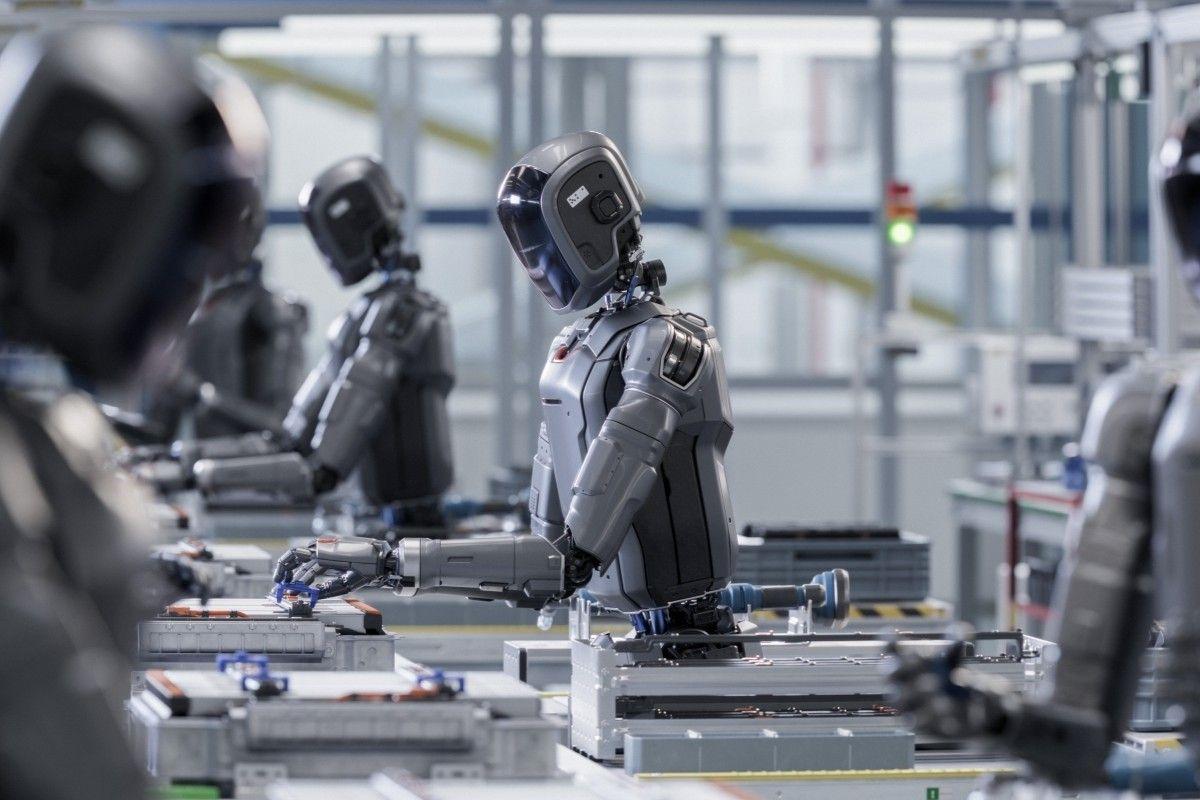
China is moving fast to industrialize humanoid robots, turning a concept that has long lived in prototypes into a manufacturing and supply-chain story with direct implications for equities and commodities. Elon Musk has repeatedly argued that humanoid robots will become ubiquitous, but China’s scaling push is increasingly defining the competitive timeline, and it is forcing investors to price a new layer of automation alongside AI chips and data centers.
Beijing has elevated “embodied” AI, the combination of software models and physical robots, into a strategic priority, using pilots, local incentives and industrial policy to pull robotics out of labs and into factories, warehouses and service settings. The shift matters for markets because it expands the investable universe from software winners into a deeper hardware stack, including actuators, sensors, motors, reducers, batteries and specialized materials.
A pricing shock is widening the gap between China and overseas peers
A key catalyst has been rapid cost compression. One of China’s best-known robot makers, Unitree Robotics, has pushed price points lower, including a newly introduced humanoid model priced at 39,900 yuan, well below a prior generation priced near 99,000 yuan. Lower sticker prices do not prove broad usefulness, but they do change the adoption math for enterprises that can justify robots as a labor substitute in repetitive tasks.
Cost decline is also showing up in component economics. Ming Hsun Lee of BofA Securities has estimated that the average bill of materials for a humanoid could run around $35,000 by the end of 2025, but could fall toward $17,000 by 2030 if most parts are sourced from China. That estimate has become a reference point for investors building out the next cycle of hardware cost curves.
The policy push is creating capacity, and also bubble risk
China’s growth model for frontier sectors tends to bring rapid capacity buildout, and humanoids are no exception. The country’s top economic planner, the National Development and Reform Commission, has publicly cautioned companies against repetitive, low-quality products and warned about bubble dynamics in the fast-expanding sector. That warning matters for markets because it increases the chance of sharp dispersion: a handful of supply-chain winners can compound, while marginal entrants get squeezed by pricing pressure, subsidy fatigue, or tougher procurement standards.
For equity investors, the immediate question becomes whether the humanoid wave behaves like early EVs, where supply chains scaled and global cost leadership emerged, or like a short-lived concept cycle that overbuilds before demand is real. The NDRC’s message does not kill growth, but it raises the probability that regulators and local governments will steer funding toward companies that can prove reliability, safety and commercial task performance.
Supply-chain winners are likely to be components, not only the robot brands
The most direct market read-through is to robotics supply chain stocks, especially companies tied to high-value parts that are hard to substitute. Humanoids require precision motion systems (servos, harmonic reducers, bearings), perception hardware (cameras, LiDAR, radar in some designs), and compute modules to run control and planning models locally. If shipments scale, these parts can see higher volumes and better utilization, improving margins even if headline robot prices keep falling.
The EV ecosystem is also an advantage. China already manufactures at scale in motors, power electronics and batteries, and that industrial base can shorten supply chains and reduce the cost of iteration. For listed markets, that tends to support second- and third-tier industrial names that sell the picks and shovels to multiple robot platforms, rather than betting on a single brand.
Rare earth magnets and export controls sit in the critical path
Humanoids are also a materials story. High-performance motors typically rely on rare earth permanent magnets, and China is central to the processing and magnet supply chain. Earlier in 2025, Musk said Tesla’s Optimus program was affected by China’s export curbs on rare earth-related products, underscoring how quickly policy can become a production constraint.
For commodities markets, any sustained scaling of humanoids adds incremental demand for magnet materials and motor-grade inputs. The bigger impact is not near-term tonnage, it is the option value: traders and producers can begin to price an additional demand leg on top of EVs, wind turbines and consumer electronics. That can tighten supply expectations and lift volatility for specific rare earth-linked exposures.
Global competition and sector rotation are the equity transmission channels
Outside China, the humanoid story can pressure valuations for competing platforms that face higher unit costs or slower manufacturing scale. The market tends to reward cost leadership and production learning curves, especially when products are still evolving. If China becomes the first market to deliver repeatable, affordable humanoids, capital can rotate toward China industrial tech while forcing non-China developers to justify premium valuations through software differentiation, safety certification, or specialized task performance.
U.S. and European tech markets can also feel it through second-order effects. More automation potential can support a “productivity bid” in certain sectors, but it can also create margin pressure for companies that compete with China’s hardware pricing or rely on imported components exposed to trade policy swings.
Base case, upside, downside: the 2026 triggers investors will trade
The base case is steady commercialization, where humanoids expand in controlled environments such as factories and logistics hubs, and volumes climb without turning into a consumer household product overnight. In this scenario, the winners are component suppliers with broad customer bases, and the market keeps a discount on pure-play robot brands until reliability data and repeat orders become visible.
The upside scenario is a faster-than-expected step change in task performance, driven by better embodied AI models and improved dexterity, paired with continued cost declines that bring total ownership costs down enough for wider enterprise adoption. Triggers would include major multi-site deployments, standardized maintenance cycles, and pricing that stays low without destroying supplier margins.
The downside scenario is a shakeout caused by overcapacity, safety incidents, or disappointing real-world productivity gains, prompting buyers to pause orders and regulators to tighten standards. The key trigger would be evidence that pricing is falling faster than capability improves, leaving the industry with thin margins and funding stress.