Nvidia’s $5B Intel Stake Reshapes AI Chip Supply Chain Trade

By Tredu.com • 12/29/2025
Tredu
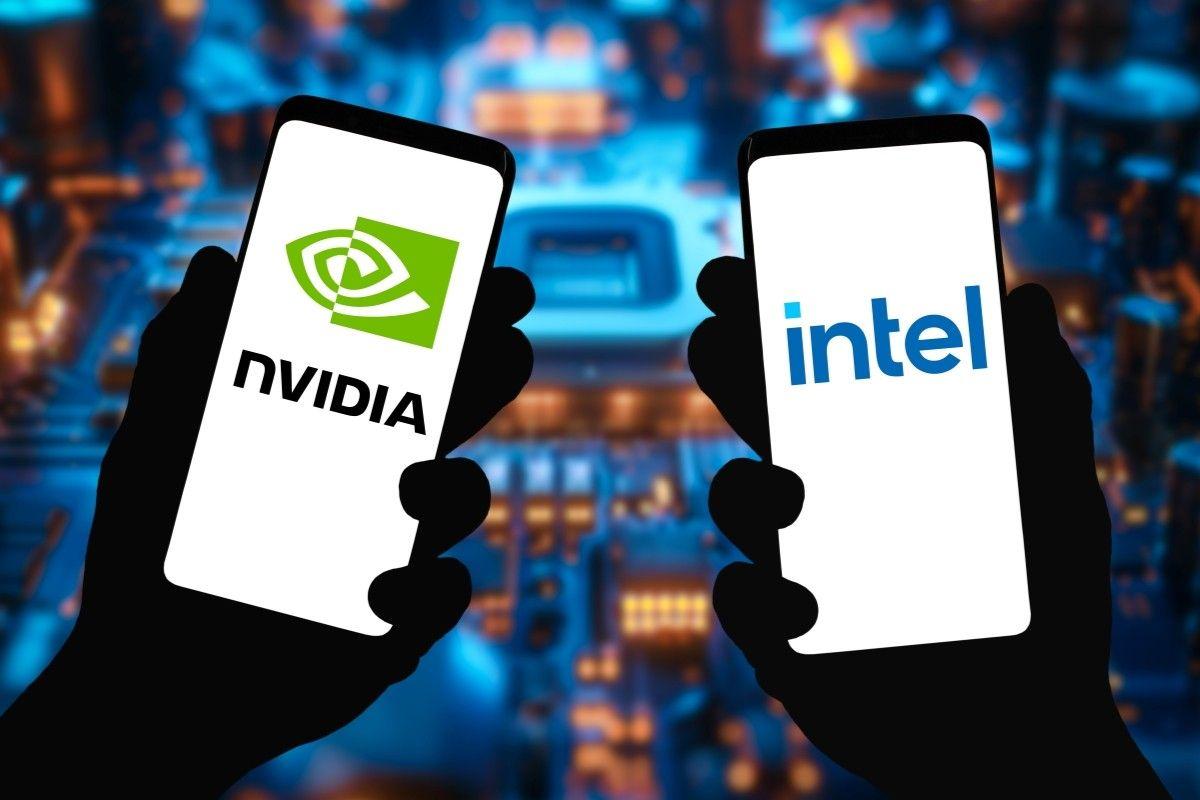
Nvidia’s Intel stake closes, turning a chip pact into capital
Nvidia completed a $5 billion investment in Intel on Monday, Dec. 29, buying more than 214.7 million newly issued Intel shares at $23.28 each under a private placement first agreed in September. The Nvidia $5B Intel stake matters to markets because it links a leading AI compute platform to a CPU maker rebuilding its roadmap and manufacturing footprint, adding a new cross-holding to the AI chip supply chain trade that reaches from silicon to system integration.
Private placement pricing and antitrust clearance frame the first trading reaction
Intel disclosed the purchase in a Dec. 29 filing, and U.S. antitrust agencies cleared the investment earlier in December, removing the main closing condition. Trading suggested investors viewed it as strategic but not immediately accretive, with Nvidia down about 1.3% in premarket trading while Intel was little changed. The fixed $23.28 price is now a visible marker for how the market judges Intel’s execution, since any rebound or setback will flow into the stake’s mark-to-market and into investor confidence around funding needs.
NVLink x86 CPUs target CPU-GPU bottlenecks inside AI servers
In the Nvidia Intel partnership, the companies plan to connect their architectures using NVLink, and Intel has said it will build Nvidia-custom x86 CPUs that Nvidia will integrate into its AI infrastructure platforms. That matters because large AI clusters are increasingly limited by data movement and latency, not only by GPU throughput. If NVLink x86 CPUs reach volume deployment, it can change AI server bills of materials and influence purchasing choices for hyperscalers that want x86 compatibility while tightening CPU-GPU integration, a shift that can ripple into networking, memory, and motherboard suppliers.
x86 RTX SoC AI PCs could reshape the next client refresh cycle
On the client side, Intel has said it will build x86 system-on-chips that integrate Nvidia RTX GPU chiplets, aiming at PCs that need tighter CPU-GPU integration. Investors will watch whether that becomes a real 2026 product cycle catalyst, because PC earnings are often driven by premium mix rather than unit growth. A successful integrated design could support higher-priced notebooks for gaming and local inference workloads, while putting pressure on lower-end discrete GPU attach rates, raising inventory risk and margin compression if OEM demand forecasts prove too optimistic.
Intel’s funding runway improves, but dilution raises the hurdle for execution
The equity raise is widely viewed as a financial boost for Intel after years of costly production-capacity expansion and strategic missteps strained its finances. More equity can reduce reliance on debt during a capex-heavy stretch, which can be supportive for semiconductor credit spreads and refinancing risk, but it also adds dilution that must be earned back through milestones. In practice, investors will look for evidence in 2026 that Intel can deliver a more competitive product cadence, improve manufacturing output and yields, and show steadier free cash flow rather than relying on periodic capital injections.
Spillovers can show up in sector baskets and in capex expectations
A tighter Nvidia-Intel alignment can reprice peers across CPUs, GPUs, and manufacturing exposure because it changes assumptions about who sits in the winning platform stack. The near-term expression is typically dispersion inside semiconductor ETFs, with relative moves driven by perceived platform attach rates and design-win momentum. In manufacturing, any sign that Intel can translate the collaboration into higher utilization and advanced packaging demand can shift capex expectations for equipment makers and for other capital-intensive names that need multi-year confidence to fund buildouts.
Why Nvidia can sell off even when the move is strategic
Nvidia’s premarket dip is consistent with an investor base that prices the company primarily on AI demand, margins, and capital allocation discipline. A $5 billion stake is small relative to Nvidia’s scale, but it is still cash deployed into a peer rather than into buybacks or internal capacity commitments, and it introduces mark-to-market exposure tied to Intel’s turnaround. That can lift volatility around earnings and macro shocks, because investors have to price not just GPU demand but also whether the equity stake remains a one-off strategic hedge or becomes a recurring source of write-down risk.
2026 catalysts that can move the risk premium in either direction
The base case is incremental progress, with investors waiting for concrete product announcements and customer adoption before repricing the relationship. Upside comes if NVLink x86 CPUs land in flagship AI platforms and if the x86 RTX SoC roadmap translates into visible OEM lineups, conditions that would support Intel’s valuation and compress the risk premium for capital-intensive chip names. Downside comes if integration timelines slip or if Intel’s product and manufacturing execution disappoints, leaving the stake as a financial overhang and keeping semiconductors trading as execution stories rather than as a single AI beta trade.
Other News

The Role of Intelligent Forex Trading Systems in Optimizing Algorithmic Trading Performance
By Tredu.com · 5/20/2026

How Machine Learning Forex Trading Bot Enhances Predictive Accuracy in Forex Markets
By Tredu.com · 5/20/2026

FinancialMarkets.media granted the Official Google Partner certification
By Tredu.com · 5/20/2026