China Sanctions 20 U.S. Defense Firms Over Taiwan Deal, Risk Rises

By Tredu.com • 12/26/2025
Tredu
Beijing’s countermeasures add a fresh headline risk factor for Asia assets
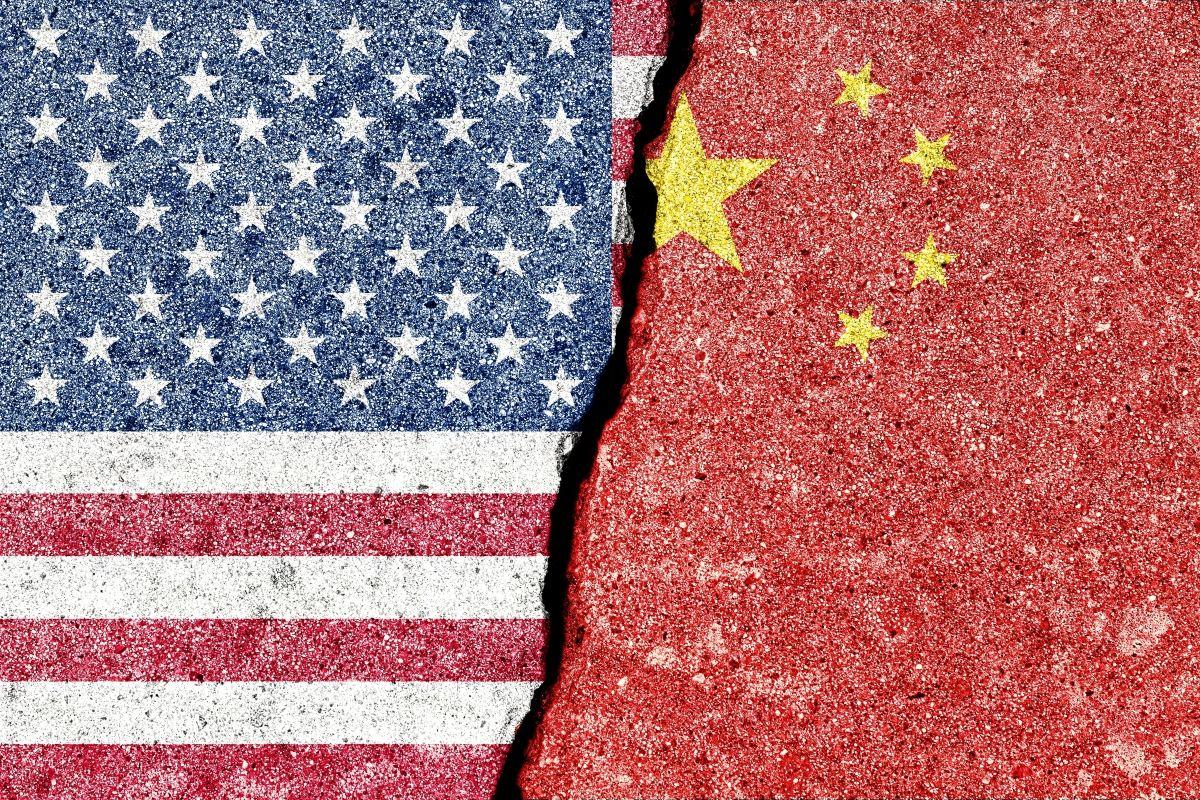
China on Friday, December 26, 2025, announced countermeasures against 20 U.S. defense-related firms and 10 senior executives after Washington moved ahead with a record $11.1 billion Taiwan arms package, inserting a new policy risk premium into a market narrative already sensitive to cross-strait escalation.
The measures freeze any assets held in China by the targeted firms and individuals and prohibit organizations and individuals in China from conducting transactions or cooperation with them. The 10 executives were also hit with visa and entry bans that explicitly cover Hong Kong and Macau.
The sanctions list reaches from prime contractors to niche drone and AI firms
The 20-entity list includes Northrop Grumman Systems Corporation, L3Harris Maritime Services and Boeing’s St. Louis branch, alongside a set of smaller contractors and technology suppliers that sit deeper in the defense supply chain.
Other named companies include naval design firm Gibbs & Cox; services provider VSE; Sierra Technical Services; Red Cat Holdings; Teal Drones; ReconCraft; High Point Aerotechnologies; Epirus; Dedrone Holdings; Area-I; Blue Force Technologies; Dive Technologies; Vantor; Intelligent Epitaxy Technology; Rhombus Power; and Lazarus Enterprises.
Individuals targeted include senior finance and operations leadership
The 10 executives named in the action include Palmer Luckey, described as the founder of defense firm Anduril Industries, as well as senior leaders from several of the sanctioned companies.
The list also includes John Cantillon (identified in the order as a vice president at L3Harris and an executive at L3Harris Maritime Services), Michael J. Carnovale (Advanced Acoustic Concepts), John A. Cuomo (VSE), Mitch McDonald (Teal Drones), Anshuman Roy (Rhombus Power), Dan Smoot (Vantor), Aaditya Devarakonda (Dedrone), Ann Wood (High Point Aerotechnologies) and Jay Hoflich (ReconCraft).
The $11.1 billion Taiwan arms package is the immediate trigger
The sanctions follow U.S. notification steps on an $11.1 billion arms package for Taiwan, described by U.S. officials as the largest weapons package announced for the island. The package includes systems such as HIMARS rocket systems, artillery, anti-armor missiles and drones, alongside parts and support elements, according to official U.S. statements released with the notifications.
Beijing reiterated that Taiwan is a core interest and warned against moves it characterizes as crossing a red line. Taiwan rejects Beijing’s sovereignty claim, while the United States is bound by domestic law to provide Taiwan with the means to defend itself, keeping arms notifications on a recurring collision course with China’s countermeasures.
Market impact is more about policy escalation than direct revenue loss
For most large U.S. defense contractors, the direct financial hit from China sanctions is typically limited because defense exports and contracting rules already constrain exposure, and many firms have minimal China-facing revenue in sensitive lines of business.
The near-term pricing channel is therefore sentiment and volatility, including swings in defense stocks tied to expectations for follow-on Taiwan orders, shifts in implied volatility around major U.S. contractors, and broader risk appetite for Asia-facing assets when cross-strait rhetoric hardens.
USD/CNH and regional FX can reprice on escalation probabilities
In currencies, the immediate focus is the probability distribution around U.S.-China policy escalation rather than the mechanical effect of asset freezes. That tends to show up first in USD/CNH hedging demand and in higher risk premia for Asia FX with high trade sensitivity to China.
If the diplomatic temperature rises into early 2026, an additional channel is corporate behavior, including more conservative inventory and capital-spending decisions by firms with China-linked supply chains, which can dampen regional growth expectations and pressure cyclical equity exposures.
Defense supply chains and dual-use components are an underappreciated channel
Several of the firms named are involved in drones, surveillance, maritime systems and advanced electronics, categories that often sit at the edge of dual-use controls. That makes the list relevant for supply chain mapping, even if the immediate restrictions are framed as bans on transactions within China.
For niche suppliers, reputational and compliance effects can matter as much as China revenue, especially if additional measures emerge that intersect with licensing, cross-border procurement, or the movement of specialized components used in defense electronics.
Base case, upside and downside scenarios for markets into 2026
The base case is that the countermeasures function primarily as signaling, with limited direct cash-flow impact on large U.S. contractors, while keeping a modest defense stocks risk premium supported by the likelihood of continued Taiwan procurement.
An upside scenario is a quieter diplomatic stretch after the initial response, allowing USD/CNH and broader Asia FX hedging costs to ease, with equities reverting to macro drivers such as rates and growth rather than geopolitics.
A downside scenario is a sequence of follow-on steps, including additional sanctions, sharper export-control actions, or military activity around Taiwan’s shipping and air corridors, which would be more likely to widen risk premia across Asian equities, lift USD/CNH hedging demand, and raise volatility for semiconductor and shipping exposures tied to cross-strait stability.