China Tells Netherlands Fix Nexperia Move, Chip Supply Hit

By Tredu.com • 12/31/2025
Tredu
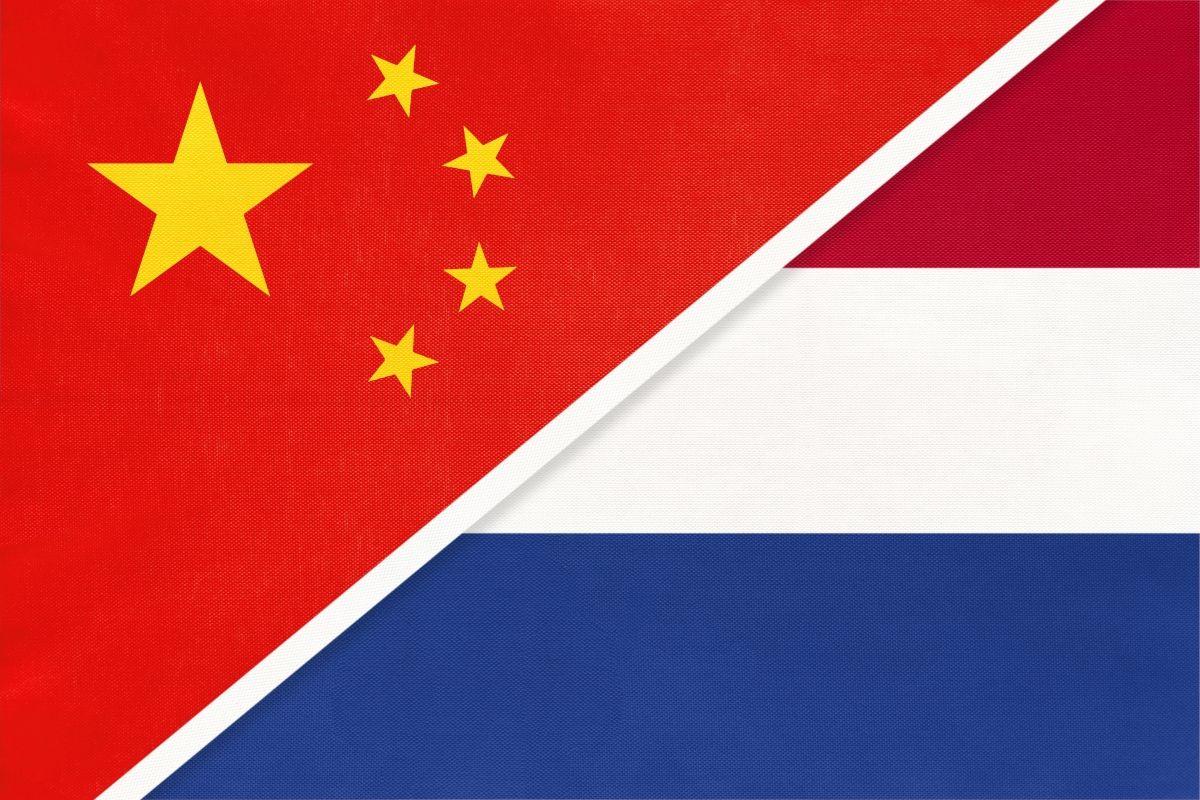
Beijing steps up pressure as the Nexperia row spills into supply chains
China told the Netherlands on Wednesday, Dec. 31, 2025 to fix what it called “mistakes” involving chipmaker Nexperia, escalating a dispute that has already hit chip supply for autos and consumer electronics. The public demand follows a Dutch government move earlier this autumn to take administrative control of Nexperia, a Netherlands-based company owned by China’s Wingtech, citing concerns about technology and production capabilities being shifted to China.
The sequence matters for markets because the fight has moved from political signalling into operational constraints. Beijing has restricted exports of certain Nexperia-made components from China, where a large share of packaging and testing takes place, turning a governance decision in Europe into a cross-border supply shock risk. Even a short disruption can carry an outsized impact because Nexperia’s parts are low-cost, high-volume components used across vehicle systems and industrial electronics.
A chip supply hit of that kind tends to show up first as a risk premium in European auto stocks, then as incremental volatility in suppliers and logistics names. For investors, the fastest transmission channel is not headline semiconductors, it is production continuity across automakers that rely on steady flows of small components to keep assembly lines running.
Dutch intervention at Nexperia became the flashpoint
The Dutch government invoked emergency-style powers to intervene at Nexperia in late September, describing the step as necessary to protect economic security and business continuity. Officials said the action was meant to prevent a scenario in which goods produced by the company could become unavailable, and to safeguard crucial technological knowledge and capabilities on Dutch and European soil.
China’s commerce ministry rejected that rationale and framed the Netherlands move as improper administrative interference in a private company. Beijing’s messaging has focused on the stability and security of the global semiconductor supply chain, arguing that unilateral action has worsened instability rather than reducing it.
The Netherlands later suspended its direct control in November as talks continued, but the issue did not disappear. Wingtech has been negotiating with court-appointed custodians tied to the Dutch intervention, keeping corporate control unresolved and making the dispute harder to separate from day-to-day operations.
The market risk is not pricing power, it is continuity
Nexperia specialises in discrete and standard semiconductors such as diodes, transistors and logic chips. These are not the high-margin AI processors that dominate equity narratives, but they are the components that sit inside basic functions such as braking modules, power management, electric windows and industrial controllers.
That is why a Nexperia dispute can reprice risk quickly in the auto complex. If deliveries of specific parts become uncertain, manufacturers can be forced into short-term production planning changes, expedited shipping and costly revalidation of alternative parts. Those costs flow into margins, and they can also hit delivery schedules, which markets often punish more rapidly than gradual pricing changes.
John Bozzella, chief executive of the Alliance for Automotive Innovation, warned earlier in the dispute that if shipments of automotive chips do not resume quickly, it can disrupt production in the U.S. and other countries, with spillovers into other industries. The warning is relevant because it highlights a familiar pattern from the 2020–2022 chip crunch: small missing components can idle large, profitable product lines.
European autos and suppliers face the sharpest near-term sensitivity
The Netherlands is central to Europe’s semiconductor ecosystem, and auto manufacturing is one of the continent’s highest-throughput industries. Any supply question that touches both tends to land in equities immediately, especially in year-end liquidity when positioning is thin.
European auto stocks typically react to two variables in a situation like this. The first is duration, whether the chips disruption lasts days, weeks or longer. The second is substitutability, whether alternative parts can be qualified quickly without re-engineering and regulatory reapproval. When substitutability is low, investors often discount near-term production volumes and apply a higher margin risk assumption to suppliers with concentrated exposure.
A second-order effect can show up in semiconductor pricing for adjacent segments. If buyers scramble for substitutes, it can lift order books for competing suppliers of similar components, but the upside is usually capped by qualification timelines and capacity constraints. In practice, it increases dispersion within the sector rather than lifting the whole group.
China’s leverage is strongest in the “mundane” parts of chips
The Nexperia episode has underlined how geopolitical leverage extends beyond cutting-edge technology into mid-range and low-end components that still rely on China-linked packaging, testing, and logistics. Alfredo Montufar-Helu, a managing director at Ankura Consulting, has described the dispute as a case study in political risk for manufacturers, because it shows how quickly supply chains can be impaired even when parts are inexpensive and widely used.
For markets, that translates into a renewed incentive to diversify. The capital expenditure implication is clear: more inventory buffers, dual sourcing, and in some cases a shift toward regionalised production footprints. Those choices can support investment narratives for European manufacturing and testing capacity, but they can also raise unit costs, which ultimately matters for inflation and corporate margins.
Market transmission extends beyond equities to FX and policy risk
While the immediate impact is most visible in autos and semiconductor-linked shares, the broader story can also influence the euro and broader Europe risk sentiment if the dispute becomes a proxy for wider EU-China friction. The channel is not direct currency intervention, it is the incremental cost of uncertainty: firms delay investment decisions, procurement gets more expensive, and cross-border approvals slow.
For China-linked equities, the dispute adds headline risk around export controls and corporate governance. For European policy, it tightens the trade-off between security screening and supply chain stability, a balance that investors care about because it affects the probability of further interventions.
What to watch next
A first trigger is any concrete step in talks between China and the Netherlands in January 2026, including whether the Dutch side restores full corporate control or sets conditions that China accepts. A second trigger is the next court-related milestone tied to the custodianship arrangements, which will shape the timeline for Wingtech Nexperia control. A third trigger is whether China adjusts export restrictions for Nexperia components made or packaged in China, because the path back to normal shipments matters more than rhetoric for markets. A fourth trigger is how automakers respond, including inventory buffers and alternative sourcing plans, because automotive chip supply risk tends to surface with a lag. A fifth trigger is whether other European jurisdictions follow the Netherlands with similar scrutiny of strategic chip assets, which would broaden the dispute into a wider policy regime.
Other News

The Role of Intelligent Forex Trading Systems in Optimizing Algorithmic Trading Performance
By Tredu.com · 5/20/2026

How Machine Learning Forex Trading Bot Enhances Predictive Accuracy in Forex Markets
By Tredu.com · 5/20/2026

FinancialMarkets.media granted the Official Google Partner certification
By Tredu.com · 5/20/2026