EU-India Trade Deal Lands as Trump Tariff Threat Hits South Korea

By Tredu.com • 1/27/2026
Tredu
Trade headlines push a new risk premium into autos, FX and rates
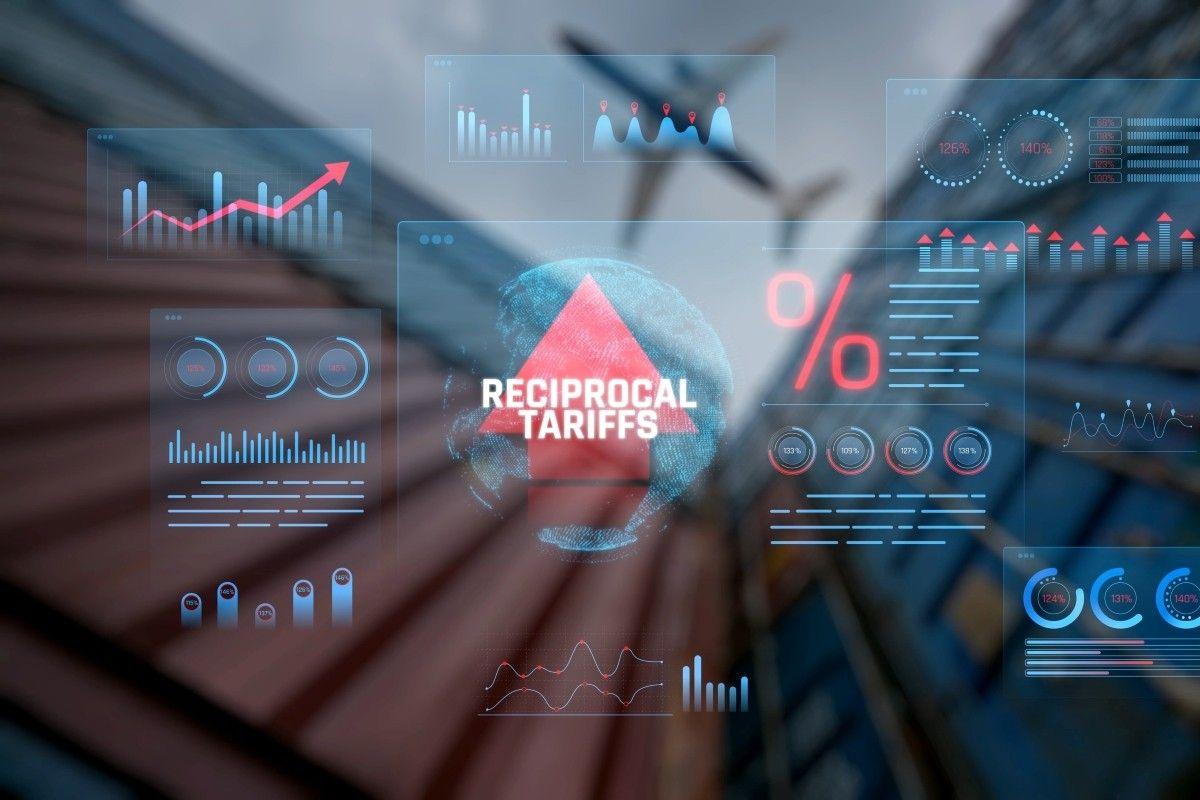
A burst of tariff and trade news late Monday, January 26 and Tuesday, January 27 is forcing investors to recalibrate the price of cross-border policy risk, with President Trump moving to raise U.S. tariffs on South Korea while India and the European Union agreed to a sweeping trade pact that lowers duties on most goods. The combination matters for markets because it hits two sensitive channels at once: export-heavy Asian supply chains and a protected consumer market in India that global carmakers have targeted for years.
The immediate market response was visible in regional dispersion. South Korean stocks ended the session higher, helped by a strong chip rally, even as the won weakened after the tariff threat. In India, local automakers fell sharply as the scale of the EU-India agreement on cars became clearer, creating a new valuation gap between domestic manufacturers and European exporters.
Trump’s 25% tariff move targets autos, lumber and pharma
Trump said he would increase tariffs on South Korean imports to 25% from 15%, pointing to delays in legislative approval in Seoul tied to a prior trade framework. The higher rate was framed to apply to autos, lumber, pharmaceutical products, and other reciprocal tariffs, but the timing of when the increase would take effect was not specified.
The policy signal is the key market driver. A tariff threat that lands without an implementation date tends to raise near-term volatility rather than reset earnings estimates immediately, because companies cannot reprice contracts until the rule is defined. For listed firms, it still pressures forward guidance, particularly in autos, components, consumer electronics, and shipping.
Korean markets swung, then finished higher as chips offset tariff fear
Korea’s benchmark KOSPI opened weaker and briefly fell about 1% after the headline, then closed up 2.73% at 5,084.85, its biggest one-day rise since January 5. The move was driven by large gains in AI-linked chip names, with Samsung Electronics rising 4.87% and SK Hynix jumping 8.70 to a record.
Auto stocks reflected the tariff sensitivity more directly. Hyundai Motor ended down 0.81% after earlier declines, Kia finished 1.1% lower after falling as much as 6% intraday, and Hyundai Mobis fell 1.1% after a steeper early drop. In FX, the won was down about 0.3% at 1,447.9 per dollar, after weakening more earlier in the session.
Lee Sung-hoon, an analyst at Kiwoom Securities, described the equity reaction as dip-buying behavior after a strong run, a dynamic that can persist if investors continue to prioritize AI-exposed earnings momentum over policy headlines.
Seoul’s response focuses on investment and energy commitments
South Korean officials moved to reassure Washington that the country remains committed to implementing the trade framework that had been discussed previously, with plans for senior trade and industry officials to travel to the United States for talks. The framework had been linked to a $350 billion investment pledge and a $100 billion commitment to buy U.S. energy products over several years, putting LNG and industrial procurement in the spillover zone if tariff friction escalates.
For energy and shipping markets, the key question is whether corporate purchase agreements and investment plans are delayed by political uncertainty, even if they are not cancelled. A pause can still change near-term LNG flows, freight demand, and capex timing across exporters and port operators.
EU-India trade deal cuts tariffs on most goods and opens guarded sectors
India and the EU agreed a long-delayed deal that will eliminate or reduce tariffs on 96.6% of goods traded by value, with the EU projecting savings of 4 billion euros in duties for European companies. The EU will also cut tariffs on 99.5% of goods imported from India over seven years, with India’s trade ministry pointing to zero duties in categories such as marine products, leather and textiles, chemicals, rubber, base metals, and gems and jewellery.
Agriculture-linked products including soya, beef, sugar, rice, and dairy were kept outside the agreement, limiting political exposure while preserving the core industrial and consumer-goods trade expansion. Two-way trade between India and the EU was about $136.5 billion in the fiscal year through March 2025, a scale that makes the deal material for European exporters and Indian manufacturers.
The ratification path remains a market variable. Legal vetting was described as likely taking about five to six months, with implementation expected within about a year, leaving scope for negotiation noise that can affect near-term pricing in exposed stocks.
Car tariffs are the flashpoint, and Indian auto shares sold off
The biggest market-moving clause involves vehicles. India agreed to cut tariffs on cars to 10% over five years from levels as high as 110%, with a quota of 250,000 vehicles a year, and an initial rate expected around 30%–35% once the agreement takes effect. The structure is designed to increase access for European automakers while limiting immediate volume disruption for domestic producers.
Indian automaker shares dropped as investors repriced competitive pressure in the premium segment. Mahindra and Mahindra fell as much as 5.1% to its lowest level since August 2025, the Nifty auto index was down about 2.1%, Maruti Suzuki fell as much as 2.95%, and Tata Motors’ passenger vehicle exposure was down around 2.3%.
Gaurav Vangaal, an analyst at S&P Global Mobility, said lower imported-car prices are likely to affect domestic manufacturers as India’s market matures and average selling prices trend higher in SUVs, a shift that raises sensitivity to premium competition.
Europe’s winners are exporters, but the deal also lifts input trade
European automakers and luxury brands stand to gain the most direct upside from easier access to India, even though Europe’s share of India’s roughly 4.4 million-unit annual car market has been below 4%. The agreement also lowers tariffs on other EU goods, including machinery, electrical equipment, chemicals, and iron and steel, broadening the benefit beyond autos.
India, however, did not secure immediate relief from the EU’s carbon border tax mechanism that started on January 1, which applies to products such as steel, cement, electricity, fertilisers, and other categories. The EU also agreed to provide 500 million euros over two years to support emissions reduction efforts in India, a funding line that can support clean-industrial capex but does not remove the near-term carbon-cost uncertainty.
Market scenarios hinge on enforcement dates and quota mechanics
The base case for markets is that the South Korea tariff threat remains a negotiation lever until a formal implementation date is set, keeping the primary effect in FX and sector volatility rather than a broad equity rerating. Under this path, chips can continue to carry Korean indexes even as autos trade with a higher risk premium.
The upside scenario is a defined timetable that narrows uncertainty, with Seoul and Washington agreeing on a compliance pathway tied to investment legislation. That would likely support the won and reduce hedging costs for exporters.
The downside scenario is a near-term activation of 25% tariffs alongside prolonged legal and political delays, which would raise the probability of order deferrals in autos and components, and could drag on Asia risk appetite if other partners face similar treatment.
For the EU-India deal, the base case is a staged opening where quotas and phase-down schedules keep the competitive impact gradual, allowing domestic Indian players time to adjust model mix and pricing. The upside is faster implementation and stronger export access for Indian goods into Europe, supporting the rupee through better trade visibility. The downside is ratification friction that slows timelines, leaving markets pricing the deal as optionality rather than an earnings driver.
Bottom line:
Tariffs are back as a live trading input, with Trump’s South Korea move lifting currency and sector volatility while the EU-India deal rewrites the medium-term map for autos and industrial trade. Investors will price the next steps through implementation dates, quota details, and how quickly policy uncertainty fades.