Nvidia Targets China H200 Shipments in February as Rules Ease

By Tredu.com • 12/23/2025
Tredu
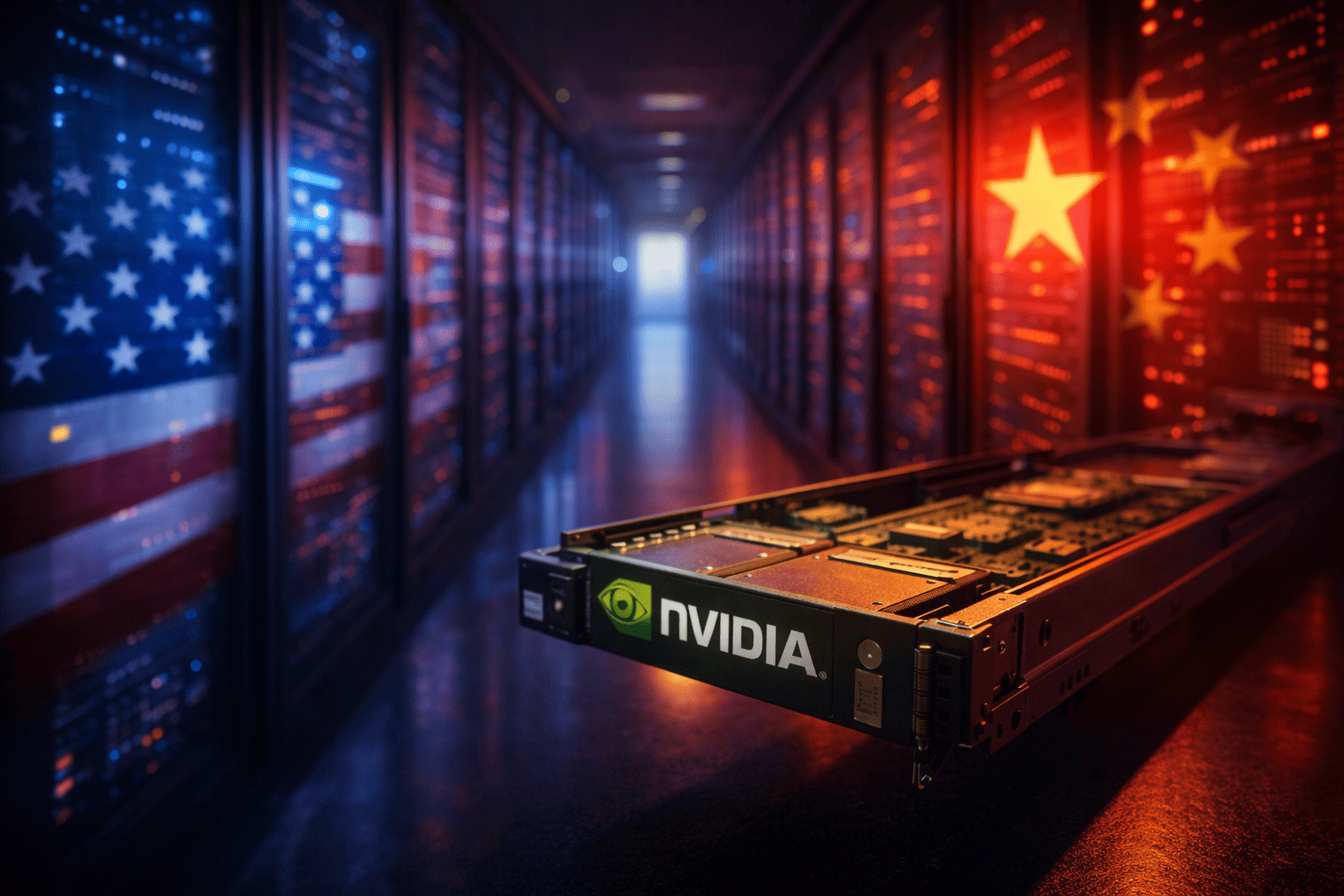
Nvidia lines up H200 deliveries as China demand builds
Nvidia is preparing to start shipping its H200 artificial intelligence chips to China by mid-February 2026, as export rules ease and customers push to secure higher-end computing capacity ahead of the Lunar New Year holiday period. The plan would mark a notable reopening of a market channel for one of Nvidia’s most powerful Hopper-generation products, after prior U.S. restrictions sharply curtailed advanced AI chip flows to Chinese firms.
The timing matters for two reasons. First, high-end accelerators have become the binding constraint for leading AI developers, meaning even modest near-term availability can reshape training schedules and product launches. Second, the shipments would test whether the new policy framework can function smoothly in practice, with approvals required on both sides and conditions that could change the economics and the pace of deliveries.
Inventory-first shipments and the scale of the initial wave
Nvidia has indicated it intends to fulfill early demand with products already in existing stock, rather than waiting for a fresh production ramp. Initial deliveries are expected to consist of about 5,000 to 10,000 chip modules, a quantity that translates into roughly 40,000 to 80,000 H200 chips depending on configuration and packaging.
That sequencing reduces lead times for customers, but it also signals a near-term ceiling. If demand outstrips inventory, the next phase becomes a capacity question, and Nvidia has suggested additional availability would open later in 2026 as new production slots become available and ordering windows widen.
For Chinese buyers, the practical issue is not only total chip count, but the speed of delivery. AI compute is often deployed in clusters, and delayed modules can prevent full utilization of networking, power, cooling, and data center build-outs already in motion.
Approvals in Beijing and Washington are still decisive
The shipment plan remains contingent on regulatory clearance, including approval processes in Beijing that are not yet finalized. Chinese authorities have signaled caution about how imported accelerators should be integrated into domestic technology goals, and discussions have included potential conditions on procurement and deployment.
On the U.S. side, the current pathway reflects a policy shift that allows H200 exports under a framework that includes a 25% tariff on the sales. That surcharge changes the pricing math for buyers and could shape how aggressively they order in the first wave versus waiting for alternative options or negotiating for better commercial terms.
The approval sequence is also important for investors because it can create stop-start logistics. Even if hardware exists in warehouses, shipments can be delayed by paperwork, license reviews, or compliance checks that complicate delivery schedules and push revenue recognition into later quarters.
Why H200 matters and what it changes for China’s AI stack
The H200 is a high-performance accelerator designed for large-scale AI training and inference, positioned below Nvidia’s newest architectures but still materially more capable than the products that have remained broadly available in China. For Chinese cloud and platform companies, access to H200-class compute can improve model training throughput, reduce time-to-train for large language models, and lower the effective cost per experiment through better utilization and memory performance.
The performance gap is central to the buying interest. The H200 has been described as roughly six times more powerful than the H20, a previously available, China-compliant variant that was designed to fit within earlier constraints. For developers competing on model quality and iteration speed, that difference can be decisive, especially when scaled across thousands of chips.
Major Chinese technology groups that operate cloud platforms and consumer AI services have been among the interested buyers, because H200 supply would let them expand AI capacity without relying solely on domestically produced accelerators that remain less mature for certain workloads.
Beijing’s conditions could shape procurement behavior
One potential friction point is how China chooses to approve and manage imports. Chinese officials have discussed approaches that could require domestic chip purchases alongside imported accelerators, a structure designed to support local suppliers and ensure the domestic ecosystem gains scale even as foreign chips enter the market.
If implemented, such conditions would influence buying patterns. A bundle requirement could slow ordering, raise total system costs, and push customers to balance immediate performance needs against longer-term industrial policy signals. It could also lead to mixed clusters, where imported H200 systems handle top-tier training while domestic chips are deployed for lighter inference or specific government-backed workloads.
For Nvidia, the commercial risk is not only whether shipments are permitted, but whether the conditions reduce volume, delay delivery windows, or compress margins after tariffs and compliance costs are accounted for.
Political pushback in the U.S. adds uncertainty
The easing of H200 exports has triggered domestic criticism from lawmakers who argue that advanced AI chips could enhance China’s capabilities in both commercial AI and military-adjacent applications. Requests have been made for more transparency around any license applications and approvals, and for briefings on how the policy will be implemented and monitored.
That political pressure matters because it can reintroduce volatility even after a rule change. Companies and customers may hesitate to commit to large multi-quarter procurement plans if they fear the framework could tighten again, or if additional reporting requirements and enforcement steps raise the operational burden of cross-border shipments.
In that environment, near-term inventory-based shipments may be easier to execute than a large sustained ramp, simply because the policy window, the approval processes, and the political narrative can shift faster than semiconductor supply chains can adapt.
What to watch next
Three signals will shape the next phase of this story.
First, the cadence of approvals, including whether Beijing greenlights orders quickly and whether U.S. processes remain predictable under the new structure. Second, the size and follow-on timing of customer commitments, including whether the initial 5,000 to 10,000 modules represent a bridge to much larger orders once new capacity opens in 2026. Third, the market response from domestic Chinese chip suppliers and from other U.S. chipmakers seeking to expand China-facing products within the rules.
Nvidia targets China H200 shipments in February as export rules ease, but the durability of that reopening will depend on how fast the approvals clear and whether policy conditions, tariffs, and political scrutiny allow a steady flow beyond the first inventory-driven wave.