Russia-Ukraine Peace Deal Could Reshape Europe Gas Supplies

By Tredu.com • 12/24/2025
Tredu
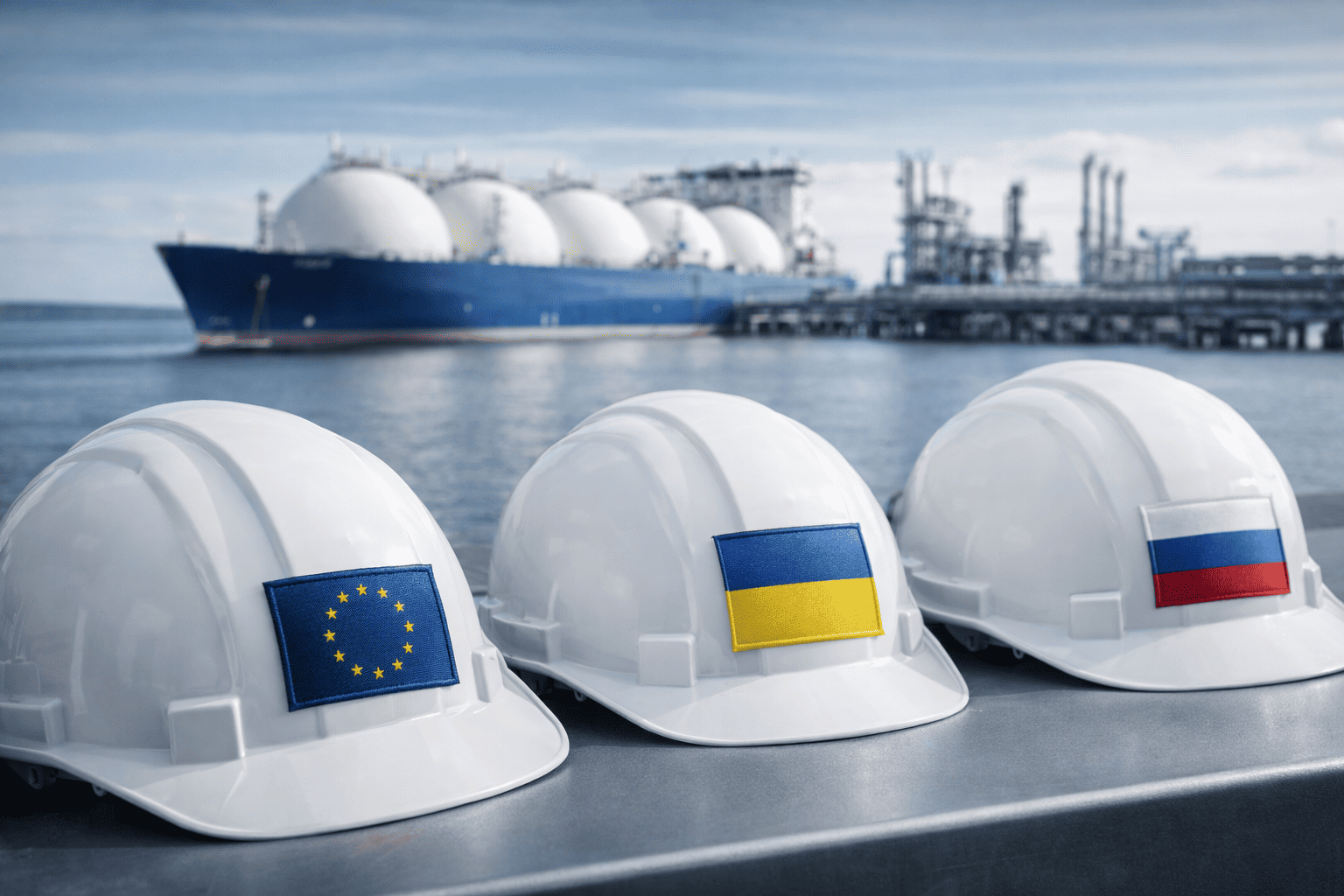
Russia-Ukraine peace deal expectations are resurfacing in markets, reviving a key question for households and industry: could it reshape Europe gas supplies and ease the price shocks of the past three years. The Dutch TTF gas price, Europe’s benchmark, traded around €28 per megawatt-hour on December 24, a level that suggests calmer conditions but still embeds a geopolitical risk premium.
Peace deal and Europe’s gas balance
Europe now runs a gas system that is structurally less dependent on Russian pipelines. The replacement mix has been higher LNG imports, lower consumption, and more pipeline inflows from Norway and other suppliers. In 2024, Russia accounted for about 11% of EU pipeline gas imports and less than 19% of total EU gas imports when LNG is included, far below the pre-war picture.
That makes a peace scenario less about a full return to 2021 and more about probabilities for the next two winters. If a ceasefire reduced the threat of disruption to energy infrastructure and shipping, the risk premium in gas and power could compress quickly, even before any physical flows change.
What Russian volumes still reach Europe
Since January 2025, Russian pipeline flows through Ukraine have been effectively halted after the transit agreement expired. In practice, TurkStream gas flows to Southeast Europe have become the main pipeline corridor for Russian gas into the EU, and deliveries via that route were estimated at about 13.8 bcm in the first three quarters of 2025. Russian LNG cargoes still arrive in parts of Europe despite political pressure to cut them.
The consequence is an uneven map. Countries most exposed to Russian supply have different sensitivities than markets that are primarily exposed to global LNG pricing and weather-driven demand swings.
Routes that could return, and why it is hard
In a peace-deal scenario, the most straightforward route to revive would be the Ukraine transit corridor, because the pipes exist and historically moved large volumes. But restarting would require new commercial arrangements, coordination on operations, and a political bargain that would be contentious for both Kyiv and Moscow, as well as for European buyers.
Nord Stream is the more dramatic headline, but it faces even higher political and technical hurdles. The Nord Stream system consists of twin lines with roughly 27.5 bcm per year each, and parts were damaged in 2022. Danish authorities have allowed Nord Stream preservation work on the damaged Nord Stream 2 line within Denmark’s exclusive economic zone, which keeps the asset from degrading further, but that is far from an application to restart flows.
The policy reality: Europe is legislating an exit
Engineering is only one constraint. Europe is also moving toward a legal phaseout of Russian gas imports that tightens through 2026 and 2027. The EU Russian gas import ban timeline includes prohibitions starting in 2026 for certain short-term LNG and pipeline arrangements, while long-term LNG restrictions begin in 2027 and the broader end-state aims for a near-complete exit by late 2027.
This is why the timing matters for markets. Europe gas supplies face 2026–2027 shift after peace deal headlines, because the window for meaningful reintegration is narrowing. In the Tredu view, the likely market impact is not a restoration of old dependency, but a repricing of risk and optionality during a transition period.
What it could mean for prices and volatility
A credible peace track can move prices even if molecules do not move. The first transmission channel is lower volatility and a smaller risk premium in front-month and next-winter contracts. Storage acts as the second stabilizer. EU storage was reported near 70% full in mid-December, reducing the likelihood of extreme winter spikes unless cold weather, outages, or LNG diversions to Asia hit at the same time.
There are limits to downside. Europe’s post-2022 system is LNG-heavy, tying benchmarks to global competition for cargoes and to liquefaction outages outside Europe. Even with reduced war risk, European prices will still reflect that global linkage unless supply growth materially outpaces demand.
Market knock-ons beyond gas
Cheaper gas is generally supportive for European industrial margins, especially in energy-intensive sectors such as chemicals, fertilizers, and metals, and it can lower wholesale power prices where gas sets the marginal unit. It can also ease headline inflation, a channel that influences rate expectations and equity multiples.
The flip side is pressure on LNG-linked producers and some midstream cash flows if European prices fall sharply. Utilities may benefit from less volatile procurement costs, but generation spreads can tighten if power prices drop faster than fuel and carbon costs.
What to watch next
Markets will look for confirmation in three places: changes in sanctions and import rules, because legal clarity drives contracting; evidence of new long-dated deals that assume Russian volumes; and the pace of global LNG supply additions in 2026–2027. If supply growth is strong, Europe can keep prices capped even as Russian gas is phased out; if not, the market will remain sensitive to weather, outages, and geopolitical shocks.
A Russia-Ukraine peace deal could reshape Europe gas supplies at the margin and lower the risk premium quickly, but the core story is that Europe has already rewired its gas market, making a full return to pre-war dependency unlikely.