U.S. Delays China Chip Tariffs to 2027, Keeps 0% Rate Now

By Tredu.com • 12/24/2025
Tredu
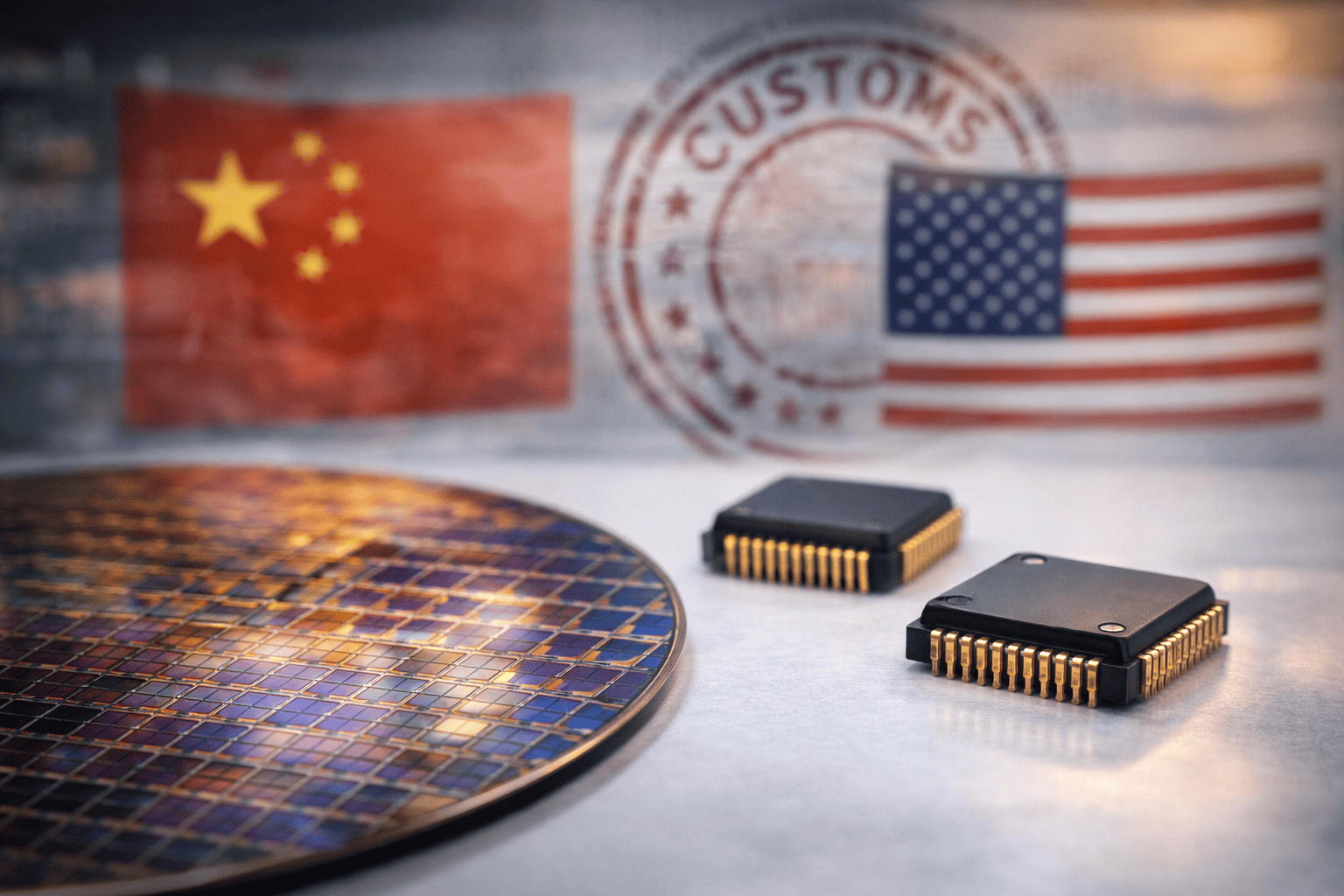
Delayed tariffs, immediate uncertainty for chip supply chains
The U.S. on December 23, 2025 set a new tariff track for semiconductor imports from China, but postponed the decisive moment until mid-2027. The policy keeps the new duty at 0% rate now, then schedules a tariff hike on June 23, 2027, with the level to be announced later, at least 30 days before it takes effect. The move matters because it preserves near-term access to widely used chips while injecting long-dated uncertainty into pricing, sourcing, and investment plans.
The decision is framed as a response to China’s push to dominate parts of the chip industry, particularly older-technology components used across the economy. Yet the delayed timetable signals a balancing act. Washington is keeping leverage for future talks, while trying to avoid an immediate cost shock that could filter into autos, appliances, industrial equipment, and telecom infrastructure.
What changes and what does not
The cleanest way to read the action is as a new layer, not a reset. Under this specific action, the duty starts at 0% and is slated to rise in 2027, once the government publishes the rate and the clock runs for at least 30 days. For companies planning procurement, the immediate impact is limited because shipments are not suddenly blocked and the new tariff does not bite right away.
At the same time, the broader tariff environment is already restrictive. An additional 50% tariff on Chinese semiconductors took effect on January 1, 2025. That existing barrier means many firms have already adjusted sourcing and pricing where they could. The new framework mainly extends the policy horizon, forcing companies to model what a second step-up in 2027 could mean for unit economics and product pricing.
Why “legacy chips” are the focus
Legacy semiconductors are not the cutting-edge processors used in the most advanced AI servers. They are mature-node parts produced at older process technologies, and they are everywhere. They sit in engine control units, braking systems, factory robots, power management devices, routers, base stations, and countless consumer products.
That ubiquity is why the policy is both potent and risky. If tariffs rise sharply, costs can cascade through manufacturing supply chains that do not have quick substitutes. But because these chips are foundational, Washington also sees them as a strategic vulnerability if domestic and allied production is undercut by state-backed capacity and aggressive pricing.
The probe behind the decision
The tariff path stems from a Section 301 probe into alleged unfair trade practices related to China’s semiconductor policies and exports. The investigation began under the previous administration and ran for about a year, culminating in a finding that opened the door to tariffs while leaving room for timing and calibration.
In its public rationale, U.S. officials have argued that China’s approach burdens U.S. commerce and warrants action. Beijing has rejected that framing, warning that politicizing trade and technology harms global supply chains and vowing to defend its interests. Those statements raise the likelihood that any eventual 2027 tariff level will be weighed against the risk of retaliation, as well as the risk of collateral damage to industries that rely on cross-border component flows.
Why the delay is a policy signal, not a pause button
Setting the date for June 23, 2027 does two things at once. It gives companies a defined horizon to diversify suppliers, qualify alternative chips, and negotiate longer-term contracts with tariff risk clauses. It also gives Washington time to pressure and negotiate without forcing an immediate confrontation that could spill into other areas of the relationship.
The delay also intersects with a separate strategic choke point: critical minerals. China has imposed export curbs on rare earth metals that many global technology firms rely on. With that as a backdrop, the U.S. has been careful about actions that could trigger a broader escalation. Recent U.S. steps in related areas include postponing a rule that would have restricted certain U.S. tech exports to units of already-blacklisted Chinese firms, and launching a review that could allow initial shipments to China of Nvidia’s second-most powerful AI chips. Together, those moves reflect a negotiation posture that mixes pressure with selective flexibility.
How this may affect markets and corporate planning
In the near term, the biggest effect is uncertainty rather than direct price changes. Manufacturers and electronics brands tend to respond to future tariff risk by shifting inventories, locking in supply, or accelerating supplier qualification. That can create uneven demand patterns, including front-loading orders in some quarters and abrupt slowdowns in others when inventories look heavy.
For investors, the clearest market channel is margin risk. If tariffs rise in 2027, the ability to pass through costs will vary. Automakers and industrial firms with long contract cycles may feel more pressure than sectors that can reprice quickly. For chipmakers and distributors, the outcome depends on mix, because many firms sell into categories that are sensitive to pennies per unit.
Currency and rates markets may also pay attention if tariffs look likely to add to goods-price stickiness. While this is not an immediate inflation shock, a higher long-run tariff regime can keep input costs elevated, influencing how companies guide and how investors discount earnings.
Scenarios: what could change between now and 2027
If the eventual tariff hike is modest, the main result could be continued gradual “de-risking” of supply chains, with firms diversifying sourcing while keeping some China-linked capacity where it remains efficient. That would likely produce manageable cost increases spread over time.
If the tariff level is punitive, the risk shifts to broader disruption. Companies could accelerate moves to Southeast Asia, Mexico, or the U.S., but qualifying legacy components is not always fast, and redesigns can be costly. A high tariff would also increase the chance of retaliation, including measures targeting U.S. firms operating in China or restrictions that tighten access to minerals and inputs.
What to watch next
Three milestones matter. First is any guidance on scope, including which tariff lines and chip categories are covered, because that determines whether the impact is narrow or touches a wide range of electronics. Second is the rate-setting signal, since the tariff level will be announced later and could move expectations well before 2027. Third is the parallel Section 232 chip import investigation, which could expand trade measures to include not only Chinese semiconductors but also a broad array of electronics containing chips from multiple countries.
U.S. delays China chip tariffs to 2027, keeps 0% rate now, and that combination is the point. The policy preserves flexibility and leverage today, while pushing companies and investors to price a wider range of outcomes for 2026–2027 supply chains.

How to Trade Like a Pro
Unlock the secrets of professional trading with our comprehensive guide. Discover proven strategies, risk management techniques, and market insights that will help you navigate the financial markets confidently and successfully.


