Samsung’s Harman to Buy ZF Driver-Assist Business for €1.5B

By Tredu.com • 12/23/2025
Tredu
What was announced
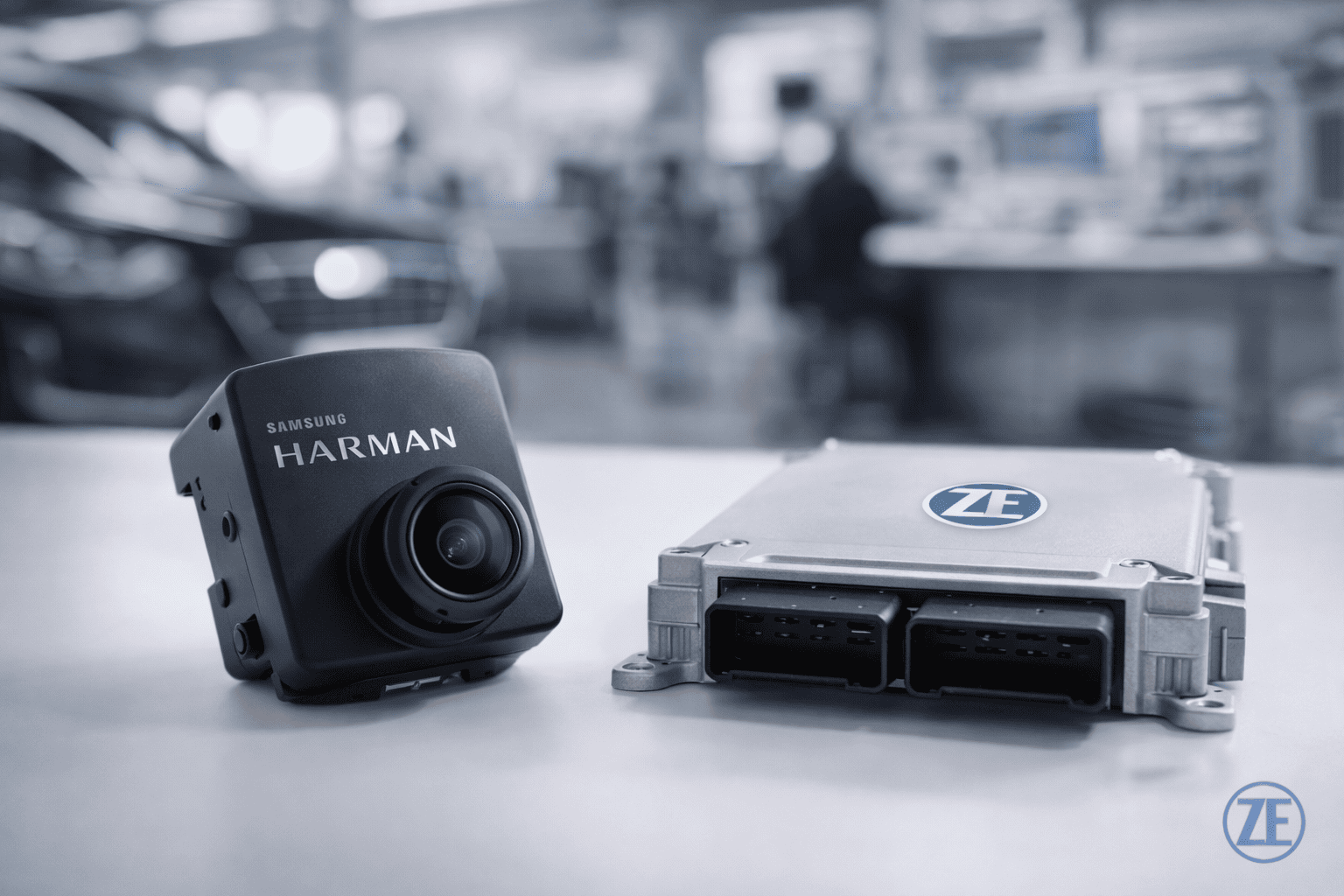
Harman, the automotive electronics unit owned by Samsung, agreed to buy a large part of ZF’s driver-assistance business for €1.5B. Samsung Harman to buy ZF ADAS business for €1.5B is the headline, but the meaning is bigger than the price tag. Harman is moving deeper into the core technology that carmakers are prioritizing for the next generation of vehicles.
The companies said the acquisition is expected to close in 2026. Until then, the businesses will continue operating under existing customer programs, which matters because car development cycles are long and automakers dislike surprises in the middle of a vehicle launch.
What is ADAS, and why does it matter
ADAS stands for advanced driver-assistance systems. Think of it as the layer of technology that helps a driver stay safer and reduces workload, without the car being fully self-driving. Common ADAS features include adaptive cruise control, automatic emergency braking, blind-spot warnings, lane departure alerts, and lane-centering assist.
ADAS depends on three building blocks:
- Sensors that gather information (cameras, radar, sometimes lidar).
- Computers that process the sensor data (controllers, domain computers).
- Software that decides what the system should do (detect a car ahead, warn the driver, apply brakes, keep the car in lane).
Carmakers are spending more on these systems because regulations are pushing more safety features into standard equipment, and because consumers increasingly expect driver-assist functions even in mid-priced vehicles.
What Harman gains from ZF
Harman is buying capabilities tied to front-facing vehicle cameras, radar technology, ADAS controllers, and related software functions. In plain terms, it is gaining the hardware and software that interpret what a car sees on the road and help control safety features.
This matters for Harman because it already sells “digital cockpit” systems, the screens, infotainment, connectivity, and in-car computing that drivers touch every day. Adding driver-assist technology lets Harman pitch a broader platform to automakers: not only what you see and hear inside the car, but also the core safety and perception stack that helps the car respond to what is outside.
There is also a practical business reason. Automakers are trying to reduce complexity by consolidating dozens of separate electronic boxes into fewer, more powerful central controllers. Suppliers that can combine cockpit functions and driver-assist functions into a more integrated system can become more valuable partners, and can win larger contracts that last for multiple model years.
Why ZF is selling now
ZF is a major auto supplier with a wide portfolio, from chassis components to powertrain systems. Selling the ADAS unit is a way to narrow focus and free up capital.
For beginners, the reason suppliers sell good assets is often balance sheet pressure and investment priorities. ADAS is expensive to compete in because it requires constant R&D, new chips, new camera and radar generations, and safety validation. If a company believes it cannot be a top player in every category, it may sell a unit to strengthen its finances and concentrate on areas where it thinks it can lead.
ZF has also been restructuring and has talked about significant job reductions in Germany through 2028. The sale supports a debt reduction effort, which can be important when interest costs rise and the auto cycle is uneven.
What happens to employees and product roadmaps
A deal like this typically involves people, not just patents and factories. The transaction is expected to move several thousand employees associated with the driver-assistance business to Harman, which helps preserve continuity for ongoing vehicle programs.
For automakers, continuity is the main concern. They want reassurance that camera modules, radar units, and control software already designed into vehicles will keep shipping, and that future upgrades will be delivered on schedule. Harman’s near-term task is to keep customer programs stable while it integrates engineering teams and aligns product plans.
How this could affect the market
The market impact is likely to show up in three areas.
First, it reinforces the “software-defined vehicle” trend. Investors have been rewarding companies that control key pieces of the vehicle electronics stack, especially sensors, compute, and software. If Harman can prove it can operate in safety-critical systems, it could strengthen Samsung’s broader automotive narrative beyond consumer electronics.
Second, it pressures other suppliers to clarify their strategy. In Europe, several auto suppliers are already simplifying portfolios to manage costs and fund future technologies. This deal signals that consolidation is not only possible, it is happening in a high-value segment.
Third, it highlights where the growth is expected. Samsung has pointed to strong expansion in the combined market for ADAS and central vehicle controllers over the next decade, driven by safety features becoming standard and by the shift toward centralized computing inside vehicles. If that growth thesis holds, suppliers with credible ADAS platforms could see stronger long-term demand, even if near-term auto production is choppy.
What to watch next
Investors and industry watchers will track:
- Whether regulators and customers accept the deal smoothly, and whether closing stays on track for 2026.
- How Harman presents an integrated roadmap that combines cockpit systems with driver-assist systems.
- Whether ZF uses the proceeds to reduce debt meaningfully and stabilizes profitability as it restructures.
- Whether competitors respond with their own partnerships, asset sales, or acquisitions to keep pace.