Trump Signals Taiwan Arms Decision Soon, Defense Stocks Reprice

By Tredu.com • 2/17/2026
Tredu
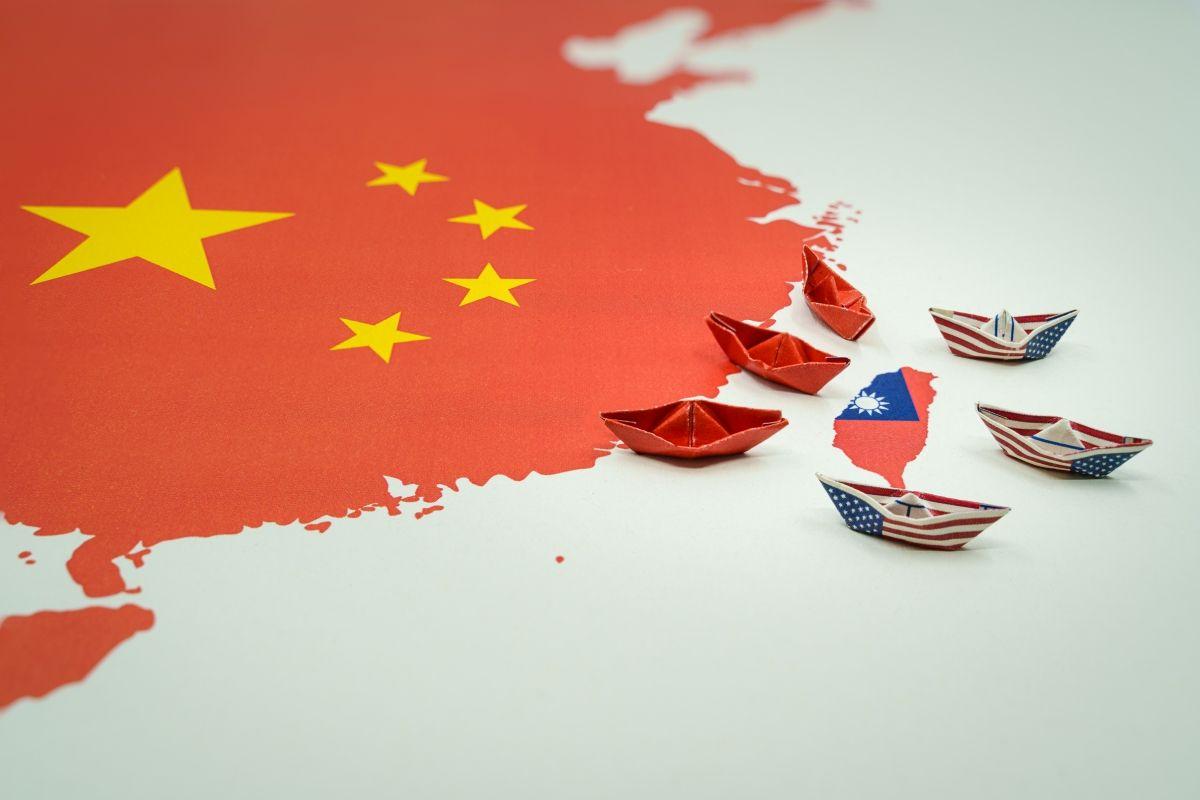
President Donald Trump said on February 16, 2026 that he is discussing future U.S. weapon support for Taiwan with Chinese President Xi Jinping and will make a determination Soon. The comment, delivered aboard Air Force One, matters for markets because it revives a familiar pricing channel: security policy headlines that shift risk sentiment across Asian equities, Asia FX hedging costs, and U.S. rates, while directly moving aerospace and Defense names.
A Taiwan Arms Decision Becomes A Near-Term Market Catalyst
Trump’s remarks Signals that arms sales policy is now being weighed alongside broader U.S.-China diplomacy ahead of an April Beijing summit. Even without an immediate announcement, a pending Decision changes trading behavior because it creates an event window where positioning becomes defensive, especially in sectors tied to Taiwan’s supply chains and the Indo-Pacific security balance.
The U.S. is Taiwan’s main international arms supplier, and prior packages have ranged from spare parts and sustainment to big-ticket systems that require multi-year production slots. With Taiwan’s threat environment described by its officials as worsening, any change in cadence, size, or timing can Reprice assumptions for contractors and for Taiwan-linked risk assets.
Existing Backlog And New Requests Keep The Stakes High
The market is not starting from zero. The U.S. has already advanced major arms packages for Taiwan since late 2025, while Taipei has been seeking to accelerate deliveries and secure additional items that align with asymmetric defense planning. Taiwan’s government has also pushed a proposed Taiwan special defense budget near $40 billion, aimed at expanding purchases and domestic readiness, but the plan has faced political delays in parliament.
That legislative bottleneck raises sensitivity to Washington’s next move. If Taiwan cannot finalize its own funding on schedule, delivery timelines can slip, and that reduces near-term revenue certainty for some suppliers even when long-term demand remains intact.
Beijing’s Red Lines Raise Volatility, Even If Trade Is Calm
Taiwan remains one of the most contentious issues between Washington and Beijing. Trump’s comment that he has been talking to Xi about it highlights that Taiwan arms policy is being discussed at the highest level, which can increase volatility because market participants must handicap whether a trade truce can coexist with security friction.
The practical impact is correlation. When headline risk rises, the Taiwan dollar can weaken as hedging demand increases, offshore yuan volatility can rise, and safe-haven currencies like the Japanese yen and Swiss franc can firm. Those moves can Lifts implied volatility across Asian equity indices and tighten financial conditions for exporters that rely on stable FX.
Defense Stocks, Rates, Credit Spreads, And Semiconductors Are The Main Channels
In equities, defense stocks often respond first because incremental weapons sales translate into tangible backlog potential, particularly for munitions, air defense, sensors, and communications. The price reaction tends to concentrate in firms with exposure to Indo-Pacific demand and in suppliers that benefit from higher production rates and longer multi-year framework orders.
Semiconductors are the second channel. Taiwan’s role in advanced chip manufacturing means any rise in perceived cross-strait Risk can affect valuations across the tech supply chain, even when factories and shipping lanes are operating normally. This is less about immediate disruption and more about the discount rate investors apply to long-duration cash flows that depend on geopolitical stability.
Rates respond through inflation and risk appetite. A higher probability of escalation can push investors into U.S. Treasuries in short bursts, lowering yields, while a clearer U.S. commitment to arm Taiwan can also raise the chance of retaliatory trade or tech measures that feed inflation expectations and lift term premia. Which effect dominates depends on whether markets interpret the headline as near-term conflict risk or long-term strategic hardening.
Credit spreads can widen at the margin for Asia issuers sensitive to cross-border trade and for levered companies exposed to supply chain uncertainty. Conversely, higher-confidence defense cash flows can tighten spreads for top-tier contractors with strong balance sheets, particularly if procurement signals point to sustained orders rather than one-off packages.
Corporate Planning Adds A Second-Order Constraint
Even if the U.S. approves additional weapons sales, production capacity and delivery schedules are binding constraints. Munitions lines have been operating at higher utilization since 2022, and expanding output requires capex, skilled labor, and long-lead inputs. That makes the market’s focus less about authorization headlines and more about whether the policy decision is paired with manufacturing expansion that turns approval into deliveries.
Base Case, Upside, And Downside Scenarios With Clear Triggers
Base Case: No Immediate Break, Decision Lands After April Diplomacy
Base case, Trump’s team delays any large new package until after the April Beijing summit, keeping the current pipeline moving while continuing discussions with Taipei on scope and timing. The trigger is diplomatic messaging that prioritizes stability through early April, paired with incremental progress on Taiwan’s special defense budget. Under this path, defense equities stay supported, Asia FX hedging remains elevated but contained, and rates trade more on inflation data than geopolitics.
Upside Scenario: A Large Package Clears, Contractors Gain Backlog Visibility
Upside, the U.S. approves a sizable set of systems and munitions with clear delivery sequencing, and Taiwan’s parliament advances funding, improving execution confidence. Triggers include a formal notification of new sales plus parallel steps to expand production capacity or accelerate existing backlogs. That outcome can lift defense stocks with relevant exposure, strengthen the Taiwan dollar on improved security signaling, and compress credit spreads for high-quality defense issuers.
Downside Scenario: A Pause Or Retaliation Reprices Asia Risk
Downside, Washington slows approvals or signals conditionality tied to Taiwan’s budget politics, while Beijing responds with sharper rhetoric or new pressure that increases perceived cross-strait risk. Triggers include a public warning from Beijing tied directly to arms sales timing, signs of intensified military activity around the Taiwan Strait, or renewed tech and trade measures. In that scenario, Asia FX hedging costs rise, equities with Taiwan supply chain exposure underperform, and risk sentiment weakens, supporting safe havens and potentially pushing Treasury yields lower in a flight-to-quality move.
Bottom line:
Trump’s comments put a Taiwan arms decision on a near-term calendar, and markets will trade the space between approval, capacity, and retaliation risk. The direction for defense and Asia assets will hinge on whether the next step is a clear package with timelines, or another delay that keeps uncertainty priced.