U.S. and Taiwan Chip Deal Cuts Tariffs, Raising China Risk

By Tredu.com • 1/15/2026
Tredu
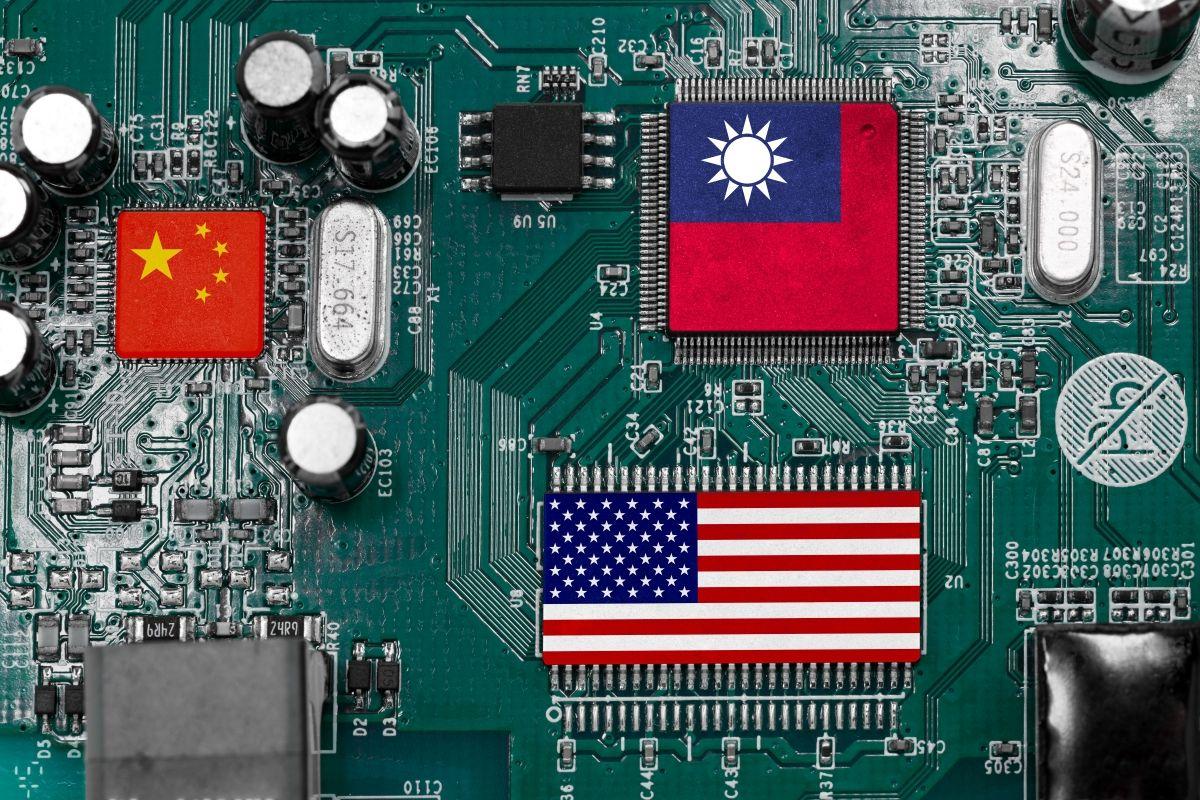
Tariff relief and investment pledges reprice the chip supply chain
The U.S. and Taiwan reached a semiconductor-heavy agreement on Thursday, Jan. 15, 2026, tying tariff relief to a massive expansion of chip capacity on American soil. The deal puts a 15% tariff cap on many Taiwanese goods, down from a prior 20% rate, and comes with an investment target that officials described as large enough to reshape supply chains across the tech sector.
For markets, the immediate impact is two-sided. More U.S. chip production can lower long-term supply risk for American buyers, while the political framing raises China-related risk premia in Asia, particularly if Beijing treats the agreement as a fresh step toward decoupling.
A 15% tariff cap sets the price of access for Taiwanese exporters
The tariff change is straightforward in headline terms: the U.S. is capping reciprocal tariffs on Taiwanese goods at 15%. The policy aim is less about near-term import inflation and more about leverage, keeping the option to tighten trade terms later if investment goals are missed.
The same framework applies carve-outs that matter to specific sectors. Officials said zero tariffs will apply to generic pharmaceuticals and their ingredients, aircraft components, and “unavailable natural resources,” categories designed to avoid disruptions in inputs the U.S. does not readily source at home.
The $500 billion headline centers on chips, but spreads across energy and AI
The investment headline is what turns this into a market-moving chip story. Commerce officials said Taiwanese semiconductor and technology companies will invest at least $250 billion in expanded U.S. production capacity. Separately, Commerce Secretary Howard Lutnick said Taiwan’s government will invest another $250 billion, bringing the total package to $500 billion.
Those figures carry direct read-throughs for semis, equipment, and construction timelines. A multi-year build cycle implies steady orders for lithography-adjacent tools, advanced packaging, facilities services, and power infrastructure, with capacity added in stages rather than in a single leap.
U.S. leverage is explicit, and the “penalty rate” is part of the pricing
Lutnick framed the agreement in transactional terms, arguing that the tariff rate is conditional on tangible buildout. He also warned that non-compliance could bring severe consequences, floating a 100% tariff as the upper bound if commitments are not met.
That language matters for investors because it narrows the range of possible policy outcomes. A conditional framework can reduce uncertainty for companies that execute, while raising tail risk for firms seen as slow to commit capital or uncertain on U.S. build schedules.
Chipmakers face a margin trade-off: resilience versus higher U.S. costs
The strategic logic of chip supply chain reshoring is clear, but investors still have to price the cost curve. U.S.-based wafer production typically comes with higher labor, permitting, and construction costs than Taiwan, and the margin impact depends on how much of that gets passed through to customers.
TSMC, the most important player in Taiwan’s semiconductor investment ecosystem, sits at the center of that trade-off. The company has already expanded in Arizona, and the new package points to a larger footprint over time, potentially clustered in industrial parks built around existing sites.
Stocks tend to reward visibility, even when the spend is heavy
Equity markets usually like capacity certainty, especially when demand for advanced compute is rising. In the near term, a higher investment runway can support chip stocks and upstream suppliers as revenue visibility improves, even if the cash spending is front-loaded.
TSMC shares were relatively steady after the announcement, following earlier gains this week after a strong earnings update. U.S.-listed suppliers connected to fab spending typically react more sharply than foundries do, since tool orders and service contracts can move faster than end-market demand.
The China angle adds a new layer of trade risk for Asia assets
The geopolitical consequence is not subtle. Beijing claims Taiwan as its territory and has historically treated U.S. moves that deepen formal economic ties as political signals. That is why the phrase China retaliation risk is creeping back into macro conversations, alongside existing concerns about tech export controls and licensing rules.
Market risk here is often expressed indirectly. Taiwan’s currency can reflect risk appetite more than the deal itself, while Asian tech indices can swing on whether investors expect additional pressure on cross-strait trade, component routing, or corporate compliance.
FX and rates channels: tariffs hit cash flows, but investment drives imports
In foreign exchange, the key variable is the expected balance between higher capital imports for U.S. fabs and steadier export demand for Taiwanese firms. A long investment ramp tends to lift U.S. imports of tools and materials, while reducing the probability of sudden chip shortages that shock U.S. tech production.
Rates markets may price a modest industrial policy premium if the buildout expands domestic capex cycles and tax incentives. A faster pace of construction and equipment spending can tighten labor markets in certain regions, but the effect is likely more visible in corporate earnings than in headline inflation prints.
What changes the market path from here: build dates and policy follow-through
The base case is that the U.S.-Taiwan chip deal moves from headline to execution, with permits, land acquisition, and tool orders starting to show up in quarterly capex updates. If the build cadence stays steady, the 15% tariff cap becomes a stabilizer for trade flows, and chip buyers gain more confidence on supply.
The upside scenario is faster-than-expected capacity scaling for advanced nodes and packaging, which would ease bottlenecks for AI servers and help limit price spikes in scarce components. That outcome would be supportive for large tech and for chip equipment names tied to multi-year demand.
The downside scenario is political escalation that stirs fresh restrictions, either through new retaliatory steps from China or through tighter U.S. enforcement around sensitive technologies. If that happens, investors are likely to lean into hedges, widen risk buffers on Asia equities, and treat supply chain news as a higher-frequency volatility driver.
Other News

The Role of Intelligent Forex Trading Systems in Optimizing Algorithmic Trading Performance
By Tredu.com · 5/20/2026

How Machine Learning Forex Trading Bot Enhances Predictive Accuracy in Forex Markets
By Tredu.com · 5/20/2026

FinancialMarkets.media granted the Official Google Partner certification
By Tredu.com · 5/20/2026