Democratic Governors Urge End to Offshore Wind Freeze as Energy Markets Watch

By Tredu.com • 12/25/2025
Tredu
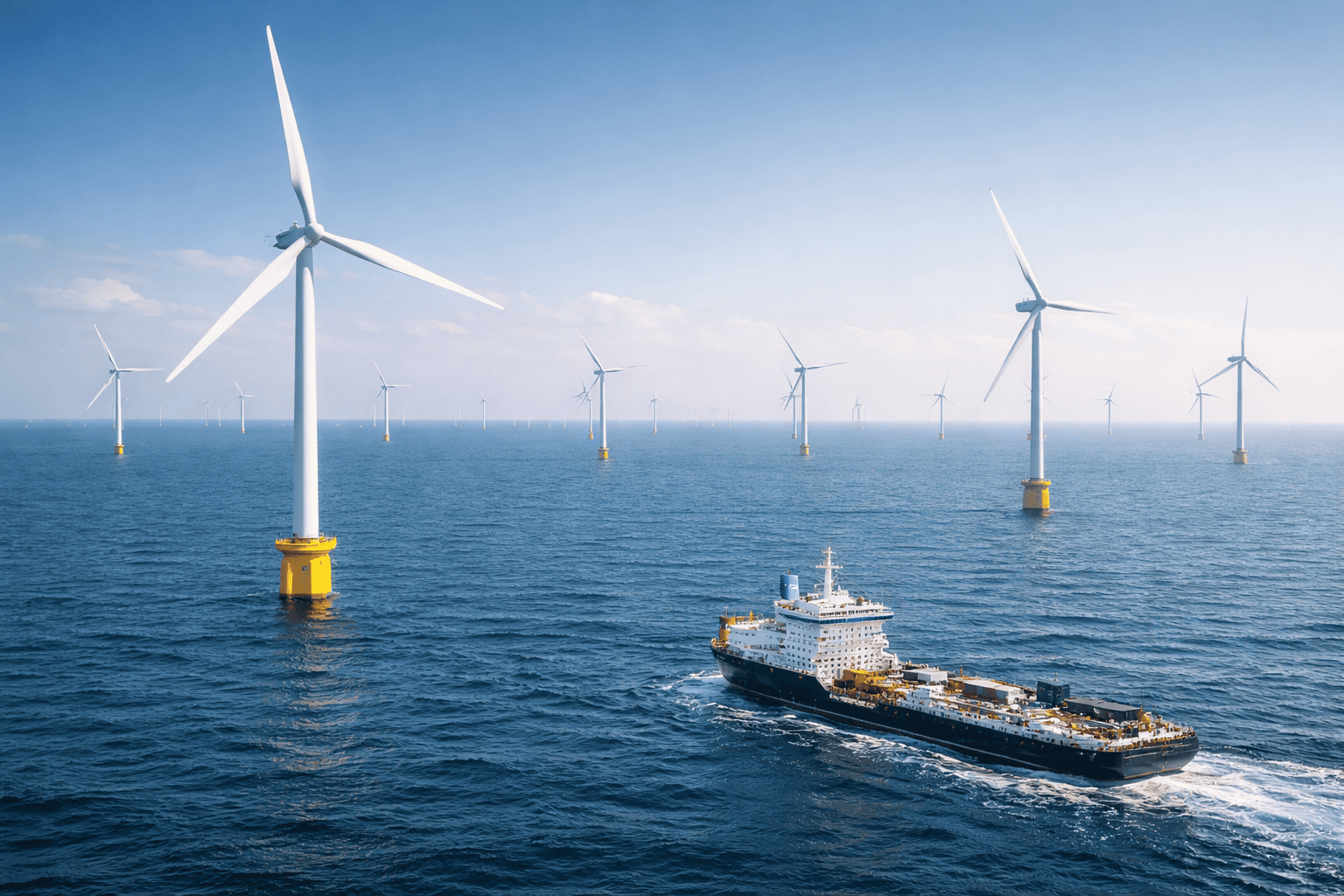
Democratic governors press Trump to lift offshore wind freeze on five projects
Democratic governors press Trump to lift offshore wind freeze measures that have halted work on five East Coast wind projects, pushing a fast-moving political dispute into the center of U.S. power and capital markets. The governors argue the projects already went through extensive federal scrutiny and that the sudden pause injects uncertainty into a sector that depends on predictable permitting timelines, long-dated financing, and supply chain planning.
The administration’s move, framed as a national security review tied to the location and radar implications of large offshore installations, has put developers, contractors, and utilities into a holding pattern. For markets, the immediate question is not whether turbines stop forever, it is whether a pause becomes a precedent that changes how investors price regulatory risk across U.S. infrastructure.
What the freeze covers and why timing matters
The current halt centers on five offshore wind developments along the U.S. East Coast that are at various stages of construction and commissioning. The pause is tied to lease and approval status, effectively freezing activity until federal agencies complete additional review steps and communicate next actions. In practice, this type of stop-start dynamic can be costly, because offshore wind schedules are built around vessel availability, seasonal weather windows, and tightly sequenced installation work.
A short pause can still have outsized impact. Offshore projects carry high fixed costs, and delays can raise financing expenses, trigger contract renegotiations, and compress returns if completion dates slide into lower-priced power periods. Even if the projects resume, developers may face higher risk premiums from lenders and counterparties.
National security review becomes the core dispute
The administration’s rationale is a national security review that, in market terms, raises a new category of uncertainty: whether previously cleared projects can be paused based on updated assessments or evolving threat perceptions. The governors say they have not been presented with specific new risks that were not already addressed during earlier federal evaluations, including processes designed to surface defense and radar concerns.
This dispute matters because it is not only about offshore wind. If national security becomes a flexible lever that can reopen settled approvals without a clear threshold, investors may start applying a wider regulatory discount to other long-cycle assets, including transmission lines, ports, and energy export facilities.
BOEM lease suspension and the permitting signal to investors
The operational mechanism is a BOEM lease suspension posture that effectively stops progress while agencies revisit the approvals stack. The key market impact is the signal it sends to capital allocators: permitting certainty is part of the product. Offshore wind competes for investment dollars against gas plants, solar plus storage, and grid upgrades. If the permitting path becomes less predictable, the cost of capital rises, and projects that looked viable on paper can become marginal.
That cost-of-capital effect can cascade through the clean energy supply chain. Turbine components, subsea cables, installation vessels, and port infrastructure investments are often committed years ahead. If project pipelines wobble, suppliers may slow hiring and capacity additions, increasing bottlenecks when activity returns.
What it could mean for power markets and reliability
For coastal states, the near-term reliability question is straightforward: if new offshore capacity is delayed, what replaces it in planning models. In many regions, the marginal replacement is gas-fired generation, imported power, or demand-side reductions. That can keep natural gas burn higher than expected during peak periods and complicate emissions and policy targets.
Power market pricing can also be affected at the margin. Offshore wind is not dispatched like a gas plant, but expectations around new renewable supply influence forward hedging, utility procurement strategies, and the timeline for retiring older assets. If the East Coast wind projects remain paused, forward curves may reflect tighter supply assumptions during certain seasonal peaks, especially when paired with rising electricity demand from data centers and electrification.
Market reaction and who is most exposed
The most direct equity sensitivity tends to appear in developers and contractors tied to offshore wind buildouts, as well as select suppliers exposed to installation schedules. Utilities can face a different set of impacts, including procurement risk if contracted renewable volumes are delayed and replacement power must be sourced at different prices.
At the macro level, the story can broaden into sentiment around U.S. permitting risk. Infrastructure investors, including private credit and long-only funds that favor stable cash flows, tend to prefer jurisdictions where approvals follow a clear timeline. A visible policy stop can make investors more cautious, not only in offshore wind, but in adjacent regulated buildouts that require multi-agency signoff.
The political economy: jobs, ports, and supply chain commitments
The governors’ argument is heavily grounded in economic stakes. Offshore wind investment supports port upgrades, specialized maritime work, manufacturing commitments, and construction employment. Pauses can strand equipment and labor plans, and they can push suppliers to prioritize other geographies where pipelines look steadier.
From a markets perspective, the jobs narrative is also a demand signal. Large-scale buildouts create predictable orders for industrial suppliers, and those expectations feed into capex plans. When policy uncertainty rises, suppliers may reduce investment, which can raise costs later, creating a second-order inflationary effect for future projects.
What to watch next
Three developments will shape how markets price this story. First, whether federal agencies specify the scope and timeline of the national security review in a way that lets developers plan work windows and financing. Second, whether the pause remains limited to these five projects or expands into a broader pattern of delayed approvals. Third, whether states and developers pursue legal or procedural challenges that force clearer standards for when a BOEM lease suspension can be used.
In the near term, offshore wind freeze outcomes will likely be reflected less in headline power prices and more in investor risk perception, financing terms, and project schedules. Democratic governors press Trump to lift the pause because they see the costs compounding quickly, and markets will be watching for a firm timetable that restores predictability.
Other News

The Role of Intelligent Forex Trading Systems in Optimizing Algorithmic Trading Performance
By Tredu.com · 5/20/2026

How Machine Learning Forex Trading Bot Enhances Predictive Accuracy in Forex Markets
By Tredu.com · 5/20/2026

FinancialMarkets.media granted the Official Google Partner certification
By Tredu.com · 5/20/2026