Global Funds Chase Chinese AI as U.S. Mega-Cap Valuations Look Frothy

By Tredu.com • 12/23/2025
Tredu
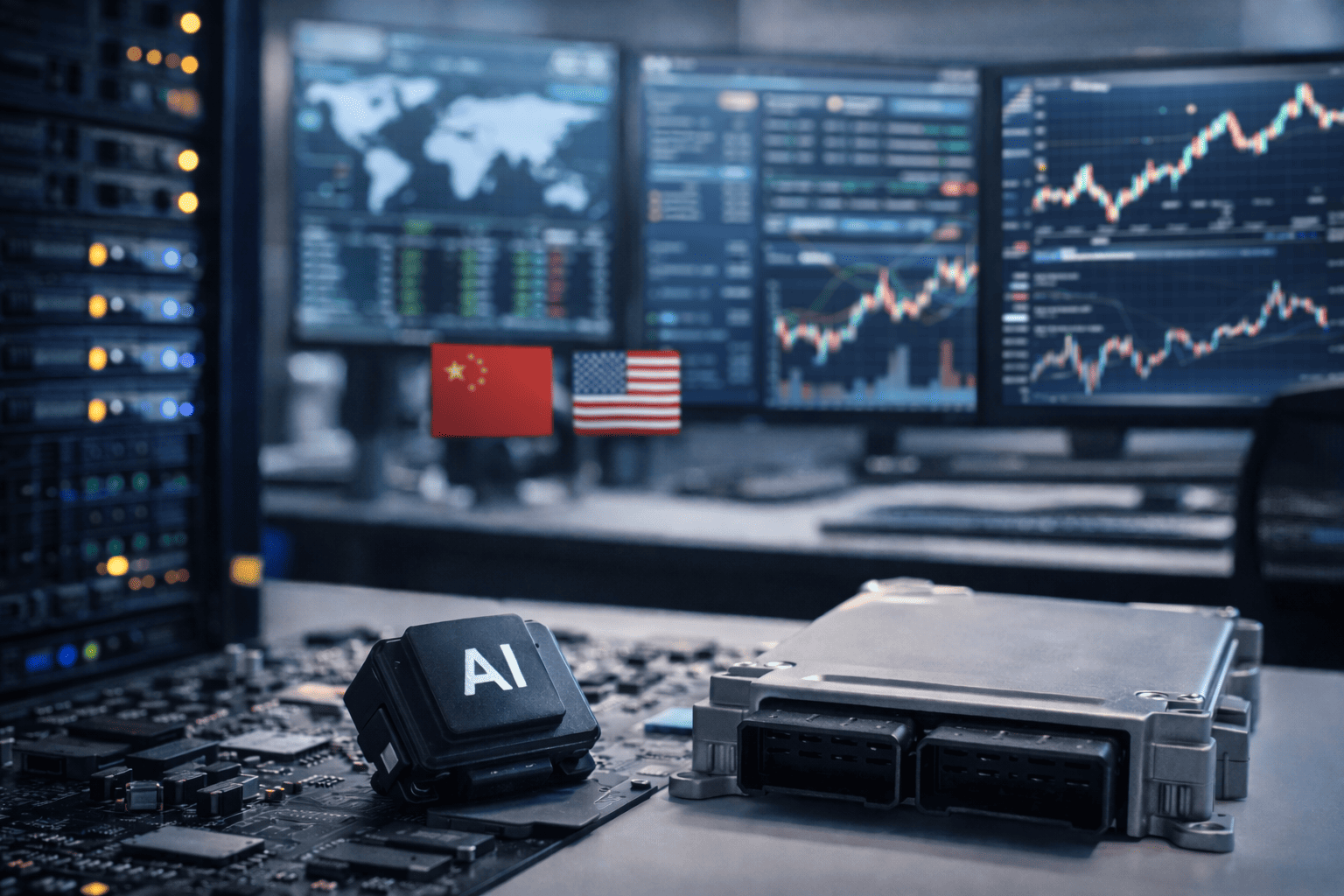
Global money rotates toward Chinese AI
Chinese AI is drawing renewed global attention in late 2025 as investors look for diversification away from crowded U.S. tech trades and a potential reset in pricing for the biggest American platforms. Global Funds Chase Chinese AI as U.S. Mega-Cap Valuations Look Frothy has become a real positioning theme in both discretionary portfolios and systematic allocations, especially among managers who worry that the next leg in the AI cycle may not be confined to U.S. leaders.
The shift is being pulled by two forces at once. One is valuation, where parts of the U.S. market look expensive relative to earnings. The other is policy and supply chain urgency, where China’s push to build more domestic AI capability is speeding up listings, funding and corporate focus across chips, cloud and industrial AI.
A valuation gap is opening the door
One of the simplest explanations for the rotation is a widening valuation gap between U.S. tech and China tech proxies. The Nasdaq has been trading around 31 times earnings, versus about 24 times for Hong Kong’s Hang Seng Tech Index, an entry point that some investors see as a cheaper way to express AI growth without paying peak multiples for U.S. leaders.
That relative pricing matters because the AI trade has become concentrated. When positioning clusters in a small group of U.S. mega-cap names, even small disappointments can trigger sharp de-risking. Investors looking to reduce that concentration can view China exposure as a hedge against a single-market outcome, even if they remain cautious on geopolitics and policy risk.
New chip listings are amplifying the story
China’s domestic market has also been generating its own momentum through blockbuster debuts by AI chipmakers and related hardware names. Recent IPOs have produced outsized first-week moves that pulled in fast money and increased public visibility for companies framed as local alternatives to global incumbents.
The most eye-catching gains have been extreme. One newly listed AI chip company surged roughly 700% in its debut week, while a larger peer rose about 400% on its first days of trading. Those moves are not typical of mature markets, but they have helped create a sense that China is building a more investable AI supply chain, at least in the eyes of traders searching for the next high-beta theme.
How large investors are expressing the trade
Institutional investors are approaching the opportunity with different toolkits. Some are leaning into established Chinese platform companies that are already liquid, widely covered and accessible through Hong Kong listings. Names such as Alibaba, Baidu and Tencent are being used as broad “China AI” proxies because they combine cloud infrastructure, large consumer datasets, and increasingly visible model and chip initiatives.
Others are reaching for more targeted exposure through ETFs and new fund structures. One widely followed China internet ETF has grown sharply this year, with assets rising by roughly two-thirds to nearly $9 billion, reflecting renewed demand for liquid vehicles that can be scaled quickly. A newer Nasdaq-listed ETF focused on transformative Chinese technologies has also attracted attention from investors who want direct exposure to onshore hardware names without navigating individual stock access and liquidity constraints.
This is also where the Meta Title logic shows up in positioning language on desks: Funds Chase Chinese AI as U.S. Mega-Cap Valuations Froth, a framing that captures the rotation away from perceived froth in U.S. pricing and toward a market where policy backing and lower index multiples can look compelling.
Policy backing, tech rivalry, and “forced investment” dynamics
China’s technology strategy is another driver. Export controls and restrictions have increased incentives for domestic investment in chips, equipment and software. For investors, that policy direction can translate into a clearer runway for certain companies, because government support can accelerate demand, financing and procurement.
At the same time, policy is a double-edged sword. A policy-led market can create sudden winners, but it can also produce crowded trades and valuation overshoots. Investors are balancing the idea that China can narrow the technology gap through engineering and manufacturing scale, against the reality that frontier innovation leadership still sits largely with U.S. firms.
The risks: hype, governance, and geopolitics
The most immediate risk is valuation discipline, particularly in newly listed chipmakers where price moves have outrun fundamentals. Several managers have warned that some onshore hardware valuations are being driven more by momentum than by earnings visibility, and that the number of durable winners could be smaller than the market currently implies.
Geopolitics remains the structural risk. Any tightening of cross-border restrictions, changes in listing access, or escalation in tech rivalry can reprice China exposure quickly. There is also the classic China investor checklist: regulatory unpredictability, corporate governance standards, liquidity gaps between markets, and the chance that policy objectives take priority over shareholder returns.
What this may mean for the market
If the rotation continues, it can influence markets in three ways.
First, it can reduce marginal demand for the most crowded U.S. AI trades, especially the Magnificent Seven, by pulling incremental allocations into Hong Kong and China-linked vehicles. That does not need to trigger an outright selloff to matter, it can simply cap upside and increase sensitivity to earnings misses.
Second, it can support China tech benchmarks and create a bid for semiconductor-adjacent names, including equipment and manufacturing plays tied to local supply chains. A sustained bid can improve primary market conditions, encouraging more listings and reinforcing the feedback loop of liquidity and attention.
Third, it can reshape global AI equity leadership narratives. If investors begin treating AI as a multi-polar theme rather than a single-country story, correlations can shift, dispersion can rise, and relative-value trades between U.S. and Asia tech can become more prominent in 2026.

How to Trade Like a Pro
Unlock the secrets of professional trading with our comprehensive guide. Discover proven strategies, risk management techniques, and market insights that will help you navigate the financial markets confidently and successfully.


