Oil Edges Lower as Venezuela Seizures and Russia Risks Jostle

By Tredu.com • 12/23/2025
Tredu
Why prices slipped after a strong prior session
Crude’s pullback was modest, but the context matters. The previous day delivered the biggest daily rise for Brent in about two months, which left the market vulnerable to consolidation as liquidity thinned into the holiday period. Traders often reduce exposure at this time of year, and that can magnify intraday swings while also limiting follow-through when fundamentals do not change materially.
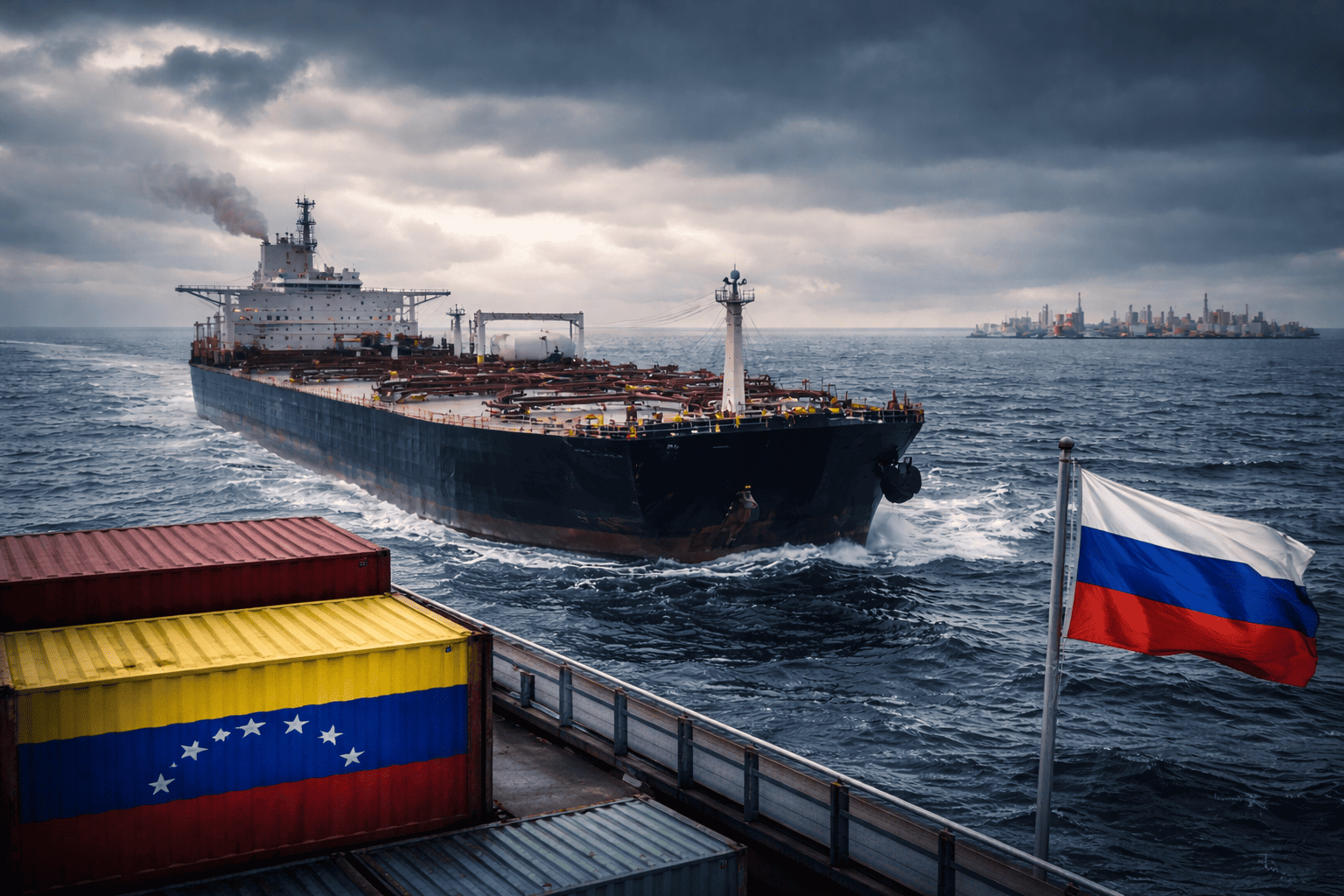
The market’s message was mixed. On one side, the risk premium increased as U.S. enforcement actions around Venezuela and renewed Black Sea attacks lifted fears of supply disruption. On the other, the broader backdrop still points to comfortable supply into the first half of 2026, keeping a ceiling on how much geopolitical headlines can lift prices before demand and inventory data take over.
Bearish fundamentals still have the microphone
The core brake on upside is the perception of oversupply. Physical availability has been supported by steady flows from major producers and a demand picture that remains uneven across regions. Floating storage has also been elevated, a sign that barrels are available and that some traders are choosing to hold crude on the water rather than rush it into refineries, which tends to blunt rallies that are not accompanied by immediate outages.
That oversupply lens matters because it changes how the market reacts to risk. Instead of pricing disruption as a shortage, traders can treat it as a reduction in surplus. The difference is important for price behavior: reducing surplus supports the market, but it does not always produce the kind of sharp squeeze seen when inventories are already tight.
Thin trading can exaggerate moves
Year-end conditions can distort the signal. With fewer counterparties active, price discovery can reflect positioning flows more than physical reality. A small wave of profit-taking can look like a trend, and a small hedge can look like conviction buying. That is why the market can swing between risk-on and risk-off interpretations of the same headline set.
Venezuela: seizures, possible sales, and export uncertainty
The Venezuela channel is no longer just a sanctions headline, it is a logistics story. The U.S. signaled it may keep or sell crude it has seized near Venezuela, and that possibility introduces uncertainty around the path of specific cargoes and the willingness of ship operators to keep lifting Venezuelan barrels under higher enforcement risk.
What could actually tighten supply
A single seizure does not automatically reduce global supply, but repeated enforcement can. If shipping companies step back, insurance costs rise, or intermediaries demand bigger discounts to compensate for the risk of interdiction, exports can slow. That can force a producer to cut output if storage fills, and it can also reduce the reliability of deliveries, which matters for refiners that schedule runs weeks in advance.
For pricing, the key variable is whether enforcement moves from episodic actions to a sustained deterrent. If that happens, the market could start pricing a higher probability that Venezuelan exports fall for longer, even if barrels are still available elsewhere.
Why the market is not pricing a major shock yet
Venezuelan crude is meaningful, but it is not dominant in the global balance. Traders also believe the broader market can remain well supplied in early 2026 even if Venezuelan flows are disrupted, which is one reason the price move has been measured. The market is effectively waiting for confirmation: the first real confirmation would be evidence of sustained export declines rather than sporadic enforcement headlines.
Russia: Black Sea disruption risk adds another layer
The Russia risk is tied to the Black Sea logistics corridor and the durability of maritime infrastructure under attack. Strikes and drone activity have damaged port facilities and vessels linked to the region’s trade, raising the possibility of delays, higher shipping costs, and temporary shutdowns that can complicate crude and product flows.
Shadow-fleet exposure keeps traders alert
A related concern is the targeting of vessels involved in sanctions-evasion networks. When attacks or enforcement actions concentrate on tankers and piers, the immediate effect is uncertainty about routes and schedules, and the longer-term effect can be a reduction in effective capacity if vessels are taken out of service or if owners refuse risky voyages. Even without a headline production cut, logistics disruption can lift a premium because refiners and traders value certainty.
What this could mean for the market
For Tredu readers tracking market impact, the setup is a tug-of-war between risk premium and oversupply. If Venezuela enforcement and Black Sea disruptions persist, the surplus for 2026 could shrink, supporting higher prices than the market would otherwise justify. If disruptions remain intermittent, the dominant driver is likely to revert to inventories, refinery demand, and producer behavior.
The most likely near-term outcome is range trading: headlines can lift crude, but the rally fades unless the physical market tightens. That dynamic tends to increase volatility in front-month contracts, widen intraday swings, and keep option pricing supported even when spot prices look stuck.
What to watch next
Three signals matter most. First, evidence of Venezuelan export slowdown, including longer loading delays, fewer departures, or wider discounts. Second, signs that Black Sea disruptions are affecting scheduled shipments rather than just creating headline noise. Third, confirmation from inventory and refinery-run data that balances are tightening, not merely repricing risk.
Other News

The Role of Intelligent Forex Trading Systems in Optimizing Algorithmic Trading Performance
By Tredu.com · 5/20/2026

How Machine Learning Forex Trading Bot Enhances Predictive Accuracy in Forex Markets
By Tredu.com · 5/20/2026

FinancialMarkets.media granted the Official Google Partner certification
By Tredu.com · 5/20/2026