Trump Defends $200 Billion Iran War Bill As Oil And Deficit Risks Rise

By Tredu.com • 3/20/2026
Tredu
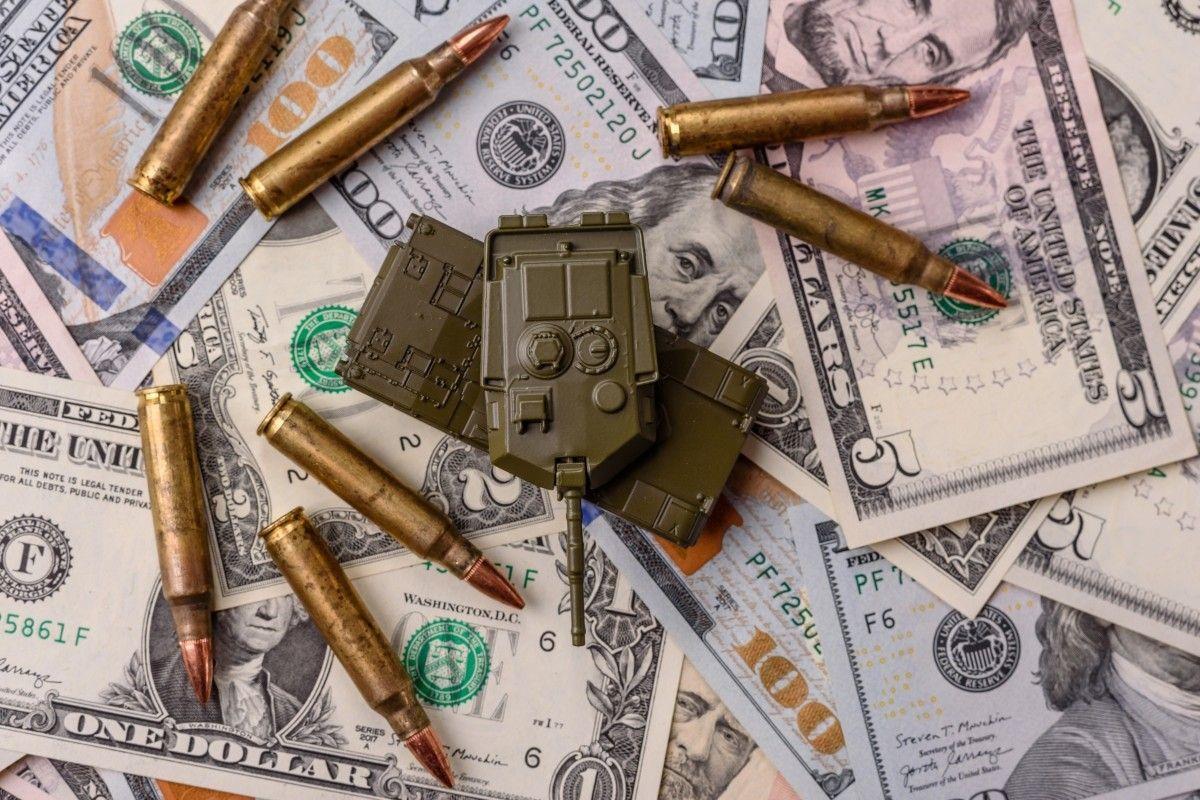
Trump Shrugs Off A Massive War Bill As Markets Price The Fallout
President Donald Trump brushed aside concern over a possible $200 billion funding request tied to the war with Iran, describing the cost as a manageable burden at a moment when markets are already grappling with higher oil prices, deeper fiscal pressure and a widening geopolitical risk premium. The figure, still subject to congressional negotiation, has moved the conflict from a military question into a full-scale macro issue for investors.
What changes with a number this large is not only the scale of the war effort, but the range of assets affected by it. A $200 billion request means markets can no longer treat the conflict as a short campaign with a contained budget footprint. The cost now touches Treasury supply expectations, defense-sector earnings, energy inflation and the political tolerance for more borrowing just as the federal debt burden keeps climbing.
The Market No Longer Sees This As A Short, Cheap Conflict
The first weeks of the war were expensive enough to unsettle energy and equity markets, but the jump from early operational costs to a proposed $200 billion package signals something more durable. Investors typically accept emergency military spending when the timeline looks short and the strategic objective appears narrow. That logic weakens quickly when the funding request starts to resemble a broader industrial and logistical buildout.
This matters because the spending is not limited to immediate operations. The money is expected to cover replenishment of missiles, bombs and defense systems, while also restoring military stockpiles and expanding production capacity. In market terms, that extends the economic life of the conflict even if frontline activity eventually slows. Defense spending becomes a multi-quarter story instead of a one-off shock.
Oil, Not Washington, Is The Fastest Transmission Channel
The most immediate market consequence remains energy. The war has already disrupted key infrastructure and shipping across the Gulf, pushing crude into triple-digit territory and lifting gasoline prices in the United States to their highest level since 2022. Once the White House appears prepared to spend at this scale, traders have another reason to assume the conflict may not end quickly.
That keeps oil elevated even when daily headlines briefly cool. Energy markets do not need every supply route to shut for prices to stay high. They only need enough evidence that disruption could last. A $200 billion war bill strengthens that idea by implying a longer operational horizon, more strikes, more replenishment needs and less confidence in a near-term de-escalation.
For equities, that means energy producers can keep benefiting from a stronger price deck, while airlines, chemicals, transport and consumer sectors remain exposed to higher fuel and freight costs.
The Fiscal Story Is Becoming Harder To Ignore
The second major channel is the U.S. fiscal outlook. A large supplemental war request would add to borrowing needs at a time when Washington is already carrying a very large deficit and a national debt above $39 trillion. Markets may tolerate higher defense spending during a crisis, but they still demand a price for more issuance, especially when inflation risk is rising at the same time.
That is why bond investors are watching this closely. If Congress seriously engages with a package of this size, Treasury supply expectations could move higher and yields could stay firm even if broader growth softens. In a normal risk-off event, war would often push money into government debt. In this case, the inflation and deficit channels are strong enough to complicate that reaction.
The result is a more uncomfortable market mix. Stocks can weaken, oil can rise and bond yields can remain stubborn because the fiscal burden and energy shock are reinforcing each other.
Defense Names Gain, But The Win Is Not Uniform
A war bill of this magnitude naturally supports the defense trade. Companies tied to missiles, munitions, air defense, ship systems and replenishment programs stand to benefit if the Pentagon receives authority to restock at scale. For parts of the aerospace and defense sector, this becomes a visibility story as much as a revenue story. Long-cycle procurement and inventory replacement can underpin earnings well beyond the current quarter.
But even here the market impact is not simple. Investors will still ask whether the spending is politically sustainable and whether contractors can expand output fast enough to match demand. A very large request can support share prices, but it can also sharpen scrutiny around margins, production bottlenecks and congressional resistance.
So the upside in defense may be real, yet it sits inside a broader macro backdrop that remains hostile for many other sectors.
Politics And Inflation Are Starting To Collide
The political risk is also rising. Fuel costs are already feeding public frustration, and a $200 billion war price tag gives both fiscal conservatives and anti-war critics a clearer target. For markets, the issue is not only whether Congress passes the money. It is whether the political battle adds uncertainty around timing, scale and strategy.
That uncertainty matters because inflation is already sensitive to energy. If the public debate around war funding drags on while gasoline and diesel prices keep climbing, central-bank expectations can shift again. The Federal Reserve may find it harder to signal easier policy into a market facing both higher oil and another large round of deficit-financed spending.
In that environment, the war ceases to be a foreign-policy story alone. It becomes part of the domestic inflation and rate debate.
Base Case, Upside Scenario, Downside Scenario
In the base case, Congress moves toward a large supplemental package, though not necessarily the full $200 billion immediately, and markets keep a significant geopolitical and fiscal premium in place. Under that outcome, oil stays elevated, defense shares remain supported and Treasury yields stay sensitive to supply concerns.
The upside scenario for broader markets would require two things to happen together: a smaller-than-feared final package and clearer signs that the conflict is moving toward containment. That combination could lower the oil premium, ease some deficit anxiety and allow risk assets outside defense and energy to stabilize.
The downside scenario is that the funding request is taken as evidence of a long war with expanding operational goals. If oil stays above $100, gasoline keeps rising and bond investors begin demanding more compensation for added borrowing, markets could face a harsher stagflation-style mix of higher energy costs, persistent inflation and weaker equity sentiment.
Bottom line:
Trump’s defense of a possible $200 billion Iran war bill tells markets that Washington may be preparing for a more expensive and prolonged conflict than many investors hoped. The real issue is no longer just the cost of war itself, but how that cost feeds oil, deficits, inflation and the broader pricing of risk across global markets.
Other News

XM Launches "Worldwide Partner Ladder – Beat Your Best" Promotion, Offering Partners Up to $40,000 in Rewards
By Tredu.com · 7/14/2026

The Role of Intelligent Forex Trading Systems in Optimizing Algorithmic Trading Performance
By Tredu.com · 5/20/2026

How Machine Learning Forex Trading Bot Enhances Predictive Accuracy in Forex Markets
By Tredu.com · 5/20/2026