White House Orders U.S. Forces to Enforce Venezuela Oil “Quarantine”

By Tredu.com • 12/25/2025
Tredu
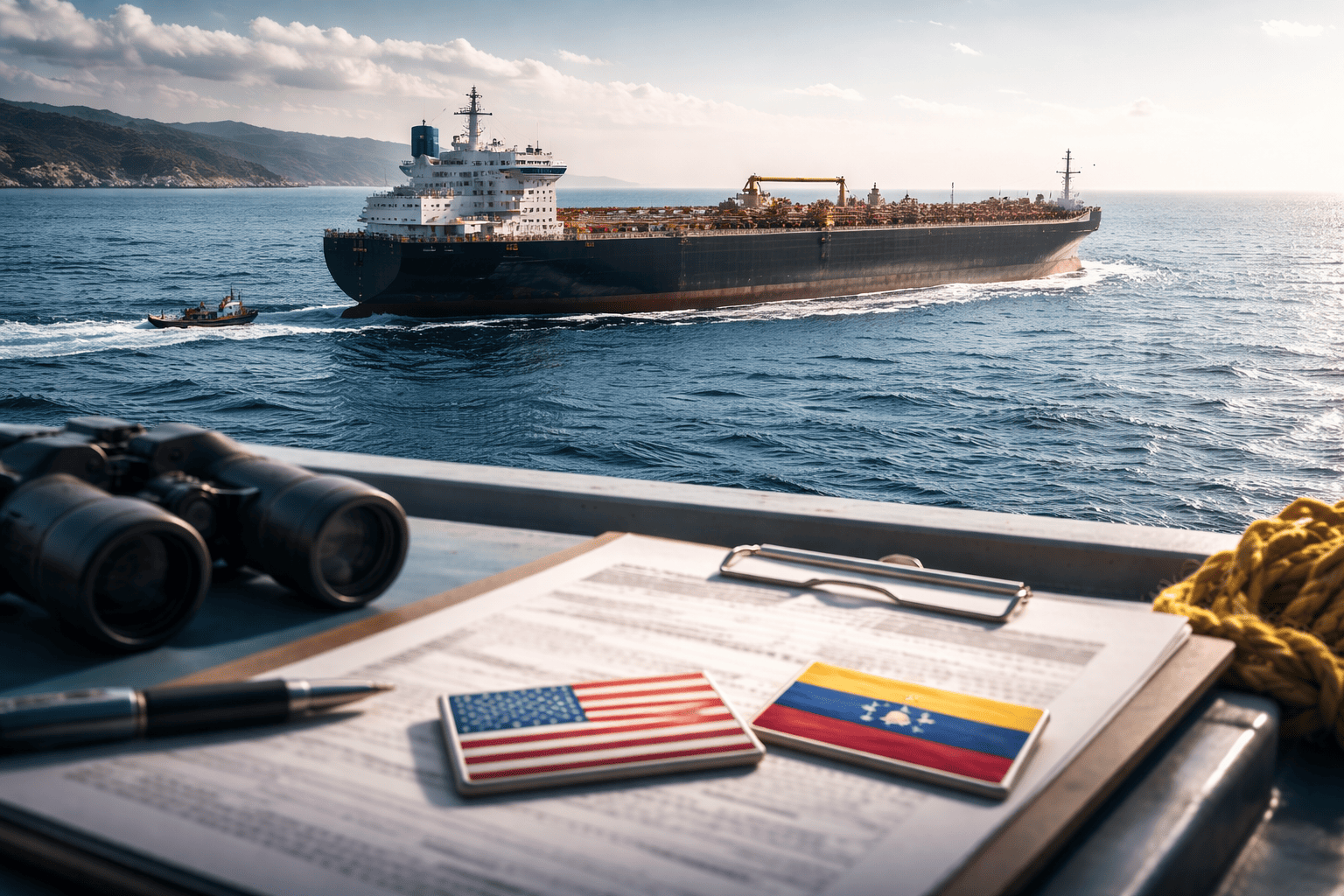
U.S. shifts to tougher oil enforcement against Venezuela
The White House has ordered U.S. forces to focus almost exclusively on enforcing a “quarantine” of Venezuelan oil for at least the next two months, signaling a strategy centered on economic pressure rather than immediate direct military escalation on land. The shift matters for crude markets because enforcement at sea can change the real availability of barrels quickly, even without any formal change to sanctions language, by raising the cost and risk of shipping, insurance, and payment.
The directive comes after recent efforts to intercept and seize Venezuela-linked tankers, with U.S. authorities pursuing additional vessels under sanctions. Even if total global supply remains ample, tighter enforcement in a single corridor can lift the geopolitical risk premium, particularly in the Atlantic Basin where refineries and trading routes are sensitive to disruptions and last-minute rerouting.
What “quarantine” means in market terms
In practice, a quarantine is a high-friction enforcement posture. It does not need to block every cargo to be effective. It only needs to introduce enough uncertainty that shipowners, insurers, and intermediaries demand higher compensation, reduce willingness to participate, or insist on tighter terms.
That uncertainty can affect Venezuelan supply through several channels: fewer available tankers willing to load, longer voyage times due to evasive routing, higher freight and insurance costs, and delays in receiving payment or arranging ship-to-ship transfers. For buyers, the cost is not only the headline price of crude, it is the embedded cost of moving it safely and legally.
How this can move crude prices
The first price response often shows up as a wider risk premium rather than a straight shortage. Traders may bid up prompt crude on the possibility of fewer barrels reaching market, while also paying more for optionality, such as storage, time spreads, and freight coverage.
If enforcement produces a sustained drop in export volumes, the impact can become more direct. Atlantic Basin grades that compete with Venezuelan heavy crude can strengthen, and refiners that depend on heavy feedstocks may have to pay more for alternatives from other producers. The relative move would likely be most visible in heavy sour differentials and in product cracks tied to diesel and fuel oil output.
A key distinction is confirmation versus headlines. Markets can fade early moves if seizures look sporadic. Prices tend to hold gains when there is evidence of a persistent decline in loadings or a clear rise in shipping friction that cannot be arbitraged away.
What it means for U.S. refiners and global product flows
Venezuelan crude is typically heavy, and heavy barrels matter because not all refineries can substitute easily. When heavy supply tightens, complex refiners with coking capacity gain an advantage, while simple refineries may face margin compression if feedstock costs rise faster than product prices.
There is also a products angle. If Venezuelan supply is constrained, some refineries shift toward alternative grades that produce different yields, which can alter the balance of diesel, gasoline, and residual fuels in the market. Those changes ripple into shipping, aviation, and industrial demand pricing, particularly when inventories are not comfortable.
Broader market impact beyond oil
Geopolitical enforcement actions can spill over into risk assets through three main pathways.
First is inflation sensitivity. Higher oil prices can reawaken inflation concerns, which can pressure rate-cut expectations and hit long-duration equities. Second is risk appetite. Sudden geopolitical escalation tends to lift volatility and favor defensives, even if macro fundamentals are stable. Third is emerging-market and credit exposure. Countries and companies tied to energy trade can see spreads widen if investors worry about sanctions spillovers, payment constraints, or a broader clampdown on supply routes.
If oil rallies sharply, energy equities often benefit while transport and consumer-sensitive sectors can lag. If the story becomes one of broader instability, even energy can become choppier, as markets begin to price tail risks that are hard to hedge.
Scenarios to watch over the next two months
A contained scenario is that enforcement raises costs but exports adapt through rerouting and intermediaries, keeping volume declines modest. In that case, crude may retain a modest risk premium, with time spreads and freight doing more of the work than outright prices.
A tighter scenario is that seizures and boarding attempts become frequent enough to materially reduce export volumes. That could lift heavy crude differentials, support global benchmarks, and raise the probability of policy responses from other producers or strategic stock adjustments.
A third scenario is escalation risk. Even without a declared blockade, repeated interdictions increase the chance of confrontation, miscalculation, or retaliatory steps, which markets typically price with wider volatility and a more persistent premium.
What investors should monitor next
Watch for evidence in loading data and shipping behavior: fewer departures, longer delays, unusual routing, higher freight, and rising insurance costs. Also watch for the response from buyers and traders, including whether they reduce exposure to Venezuela-linked cargoes or demand deeper discounts.
On the policy front, the most important signals are whether enforcement is sustained beyond the stated window, whether exemptions or clarifications are issued, and whether additional actions target intermediaries, shipping networks, or financial channels.

How to Trade Like a Pro
Unlock the secrets of professional trading with our comprehensive guide. Discover proven strategies, risk management techniques, and market insights that will help you navigate the financial markets confidently and successfully.


