Crude Climbs as U.S. Tanker Hunt Near Venezuela Lifts Risk

By Tredu.com • 12/22/2025
Tredu
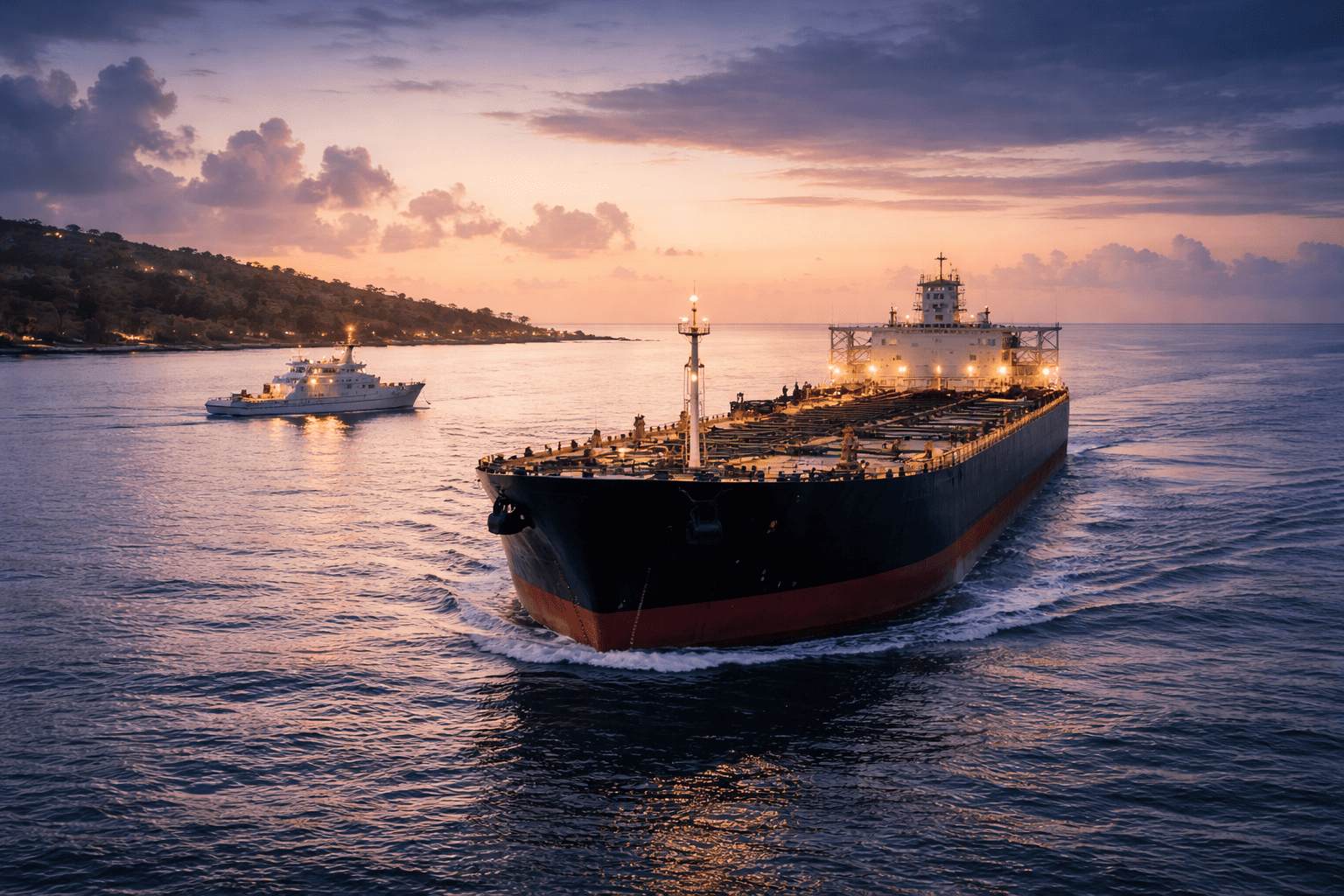
Crude climbs as tanker enforcement escalates near Venezuela
Crude climbs as U.S. tanker hunt near Venezuela lifts risk on Monday, December 22, 2025, after American forces intensified maritime enforcement tied to sanctioned oil trade. The latest action focuses on a vessel that officials described as operating under a false flag and subject to a judicial seizure order, part of a broader campaign to disrupt sanctions evasion networks moving crude from Venezuelan waters.
Brent gained about 52 cents to around $60.99 a barrel, while West Texas Intermediate added about 50 cents to roughly $57.02. The advance was measured rather than explosive, but it reflected a market that increasingly treats shipping disruption as a direct channel for supply risk, not just a compliance headline.
What happened at sea and why it matters
The U.S. Coast Guard was described as being in active pursuit of a tanker in international waters near Venezuela, an operation that would mark the third interception attempt linked to Venezuelan crude in less than two weeks if it results in a boarding or seizure. The targeted ship has been described by officials as part of a “dark fleet” style network designed to obscure cargo origin and routing, a method that typically relies on flag changes, complex ownership chains, and documentation tactics.
The escalation matters for oil pricing because it shifts enforcement from financial penalties and paperwork constraints toward physical intervention at sea. Traders tend to price physical risk differently, especially when boarding actions can delay voyages, strand ships, or deter operators from accepting new fixtures. Even if the overall volume at stake is small relative to global demand, the near-term impact can show up in freight rates, insurance premiums, and the willingness of intermediaries to move barrels.
A blockade posture and the mechanics of disruption
The enforcement push sits within a blockade posture aimed at sanctioned tankers entering and leaving Venezuela. In practical terms, a blockade framework can squeeze exports without a single pipeline shutting down. If shipowners fear interdiction, they may avoid Venezuelan loadings; if insurers tighten coverage, costs rise; if banks and traders pull back, financing for voyages becomes harder. The result can be slower loadings, longer voyages, and more frequent delays, all of which reduce effective export capacity.
This is also a timing issue. Late December tends to bring thinner liquidity across futures markets and physical trading. When fewer counterparties are active, price moves can become more sensitive to geopolitical developments, even if fundamentals have not changed dramatically.
The earlier seizures and the signal to the market
Two prior cases have framed how investors interpret the latest pursuit. One vessel seized earlier in December, the Skipper, later reached the Galveston Offshore Lightering Area near Houston, a common location for transferring crude from very large crude carriers to smaller ships before moving cargo onward. That development suggests seized cargoes can re-enter standard logistics channels, which reduces uncertainty about where barrels ultimately land, but it also highlights how enforcement can tie up shipping capacity and create legal complexity that slows future movements.
A second interception over the weekend reinforced that the operating environment is tightening. For traders, the sequence is the story: repeated actions at sea can deter participation more than a one-off event, because the perceived probability of disruption rises with each successful interdiction.
Why the price move is modest, and why it could change
Despite the escalation, the oil market response has so far been contained because Venezuelan exports are a relatively small share of global supply, and because the broader market has buffers such as inventories and flexible refinery demand. In addition, a senior U.S. economic official argued the actions were targeted at black-market operations and would have limited impact on U.S. prices, a message intended to reduce expectations of a large energy shock.
Still, contained does not mean irrelevant. A modest geopolitical premium can persist if traders believe enforcement will continue, particularly if operators step back from voyages that carry elevated legal and physical risk. The other variable is whether enforcement begins to affect loadings data and port activity in a way that signals a genuine reduction in barrels reaching end markets.
Venezuela’s export risk and the storage constraint
For Venezuela, the key pressure point is not just revenue, it is storage. If exports slow and onshore tanks fill, producers can be forced to curb output, even if wells are capable of pumping more. This is one pathway by which an enforcement campaign can translate into reduced supply, not by damaging production, but by blocking the ability to move crude off the coast.
Venezuelan officials have signaled they intend to keep oil trade flowing. That stance could translate into tactical adaptations such as rerouting, increased use of intermediaries, or attempts to protect shipments. Those responses may keep volumes moving, but often at a higher cost, which can widen discounts on Venezuelan crude and reduce net revenue per barrel. For the market, the crucial question is whether these adaptations preserve the pace of exports or merely slow the decline.
Shipping, insurance, and the “dark fleet” knock-on effects
A tougher maritime posture can ripple beyond Venezuela by reshaping tanker availability and freight economics. When ships involved in high-risk trades are detained, rerouted, or taken out of circulation, the remaining pool of suitable vessels can tighten. Insurers may also adjust war-risk pricing for specific routes, raising voyage costs. Even when crude ultimately finds a buyer, higher friction can change the economics and timing of delivery.
There is also a behavioral effect. Operators may increase opacity, turning off tracking or avoiding standard ports, which can make supply harder to monitor and increase uncertainty premiums. Markets dislike uncertainty, and that tends to show up first in shorter-dated contracts and time spreads as traders adjust to potential delivery disruptions.
Wider geopolitical backdrop adds support
Oil was also supported by broader geopolitical tension outside Latin America, including continued uncertainty related to the Russia–Ukraine conflict and risks to shipping and energy infrastructure. When multiple flashpoints coexist, traders are more inclined to keep a baseline premium embedded in prices, even if none of the individual risks has yet produced a large supply loss.
That broader environment matters for positioning. If money managers are already cautious, they may be quicker to add hedges in response to enforcement headlines, which can lift crude benchmarks even when the immediate physical impact is still uncertain.
What to watch next
Three developments will shape whether this remains a modest risk premium or becomes a more durable repricing.
First, the operational outcome of the pursuit, including whether the tanker is boarded, redirected, or seized, and whether additional vessels become targets in the coming days. Second, evidence of physical disruption, such as slower loadings, longer queues, or signs that exports are backing up onshore. Third, the response from Venezuela and trading partners, including any shift toward escorts, rerouting, or countermeasures that raise the chance of miscalculation at sea.
For now, crude climbs on a clear message: the U.S. Venezuela tanker hunt has moved from compliance pressure to operational enforcement, and that shift is enough to lift risk and supply risk sentiment even before a major volume impact is visible.
Other News

The Role of Intelligent Forex Trading Systems in Optimizing Algorithmic Trading Performance
By Tredu.com · 5/20/2026

How Machine Learning Forex Trading Bot Enhances Predictive Accuracy in Forex Markets
By Tredu.com · 5/20/2026

FinancialMarkets.media granted the Official Google Partner certification
By Tredu.com · 5/20/2026